

Charles Hoskinson doesn’t mince words. The founder of Cardano has publicly criticized Bitcoin’s latest quantum resistance proposal, and the crypto community is paying attention.
With no verifiable real-time price data for BTC or ADA in the past 48 hours, the real news here isn’t in a price chart, but in the architectural debate quietly shaping the sector’s long-term future.
The controversy centers on BIP-361, a Bitcoin improvement proposal designed to protect up to 34% of the Bitcoin supply—approximately 7 million coins worth $536 billion USD—by freezing wallets that do not migrate to quantum-resistant addresses.
Hoskinson’s response was blunt: “That’s a lie.” He argues that the proposal still leaves 1.7 million BTC (~$127 billion USD) permanently unrecoverable, including at least 1.1 million coins believed to belong to Satoshi Nakamoto. “Have fun stealing Satoshi’s coins,” he added with his characteristic sarcasm.
The 1.7 million at-risk coins predate BIP-39 seed phrase standards, meaning there is no clean recovery path, period.
This isn’t just a technical dispute. It points to a deeper rift forming between Bitcoin’s conservative update culture and the more agile architectural choices being made elsewhere, with real consequences for which networks will survive a quantum computing future.
Can Bitcoin and Cardano’s crypto weather the quantum storm ?
No verified price data for BTC or ADA has emerged in the 48-hour window for this analysis, an unusual calm given the relevance of the conversation happening at the protocol level. What is clear is that the risk of quantum computing currently does not carry a short-term price premium.
Jameson Lopp, a Bitcoin Core developer, estimates that full migration could take 5-10 years, which keeps the immediate market impact mitigated.
However, the stakes at the technical level are significant. Both BTC and ADA, like Ethereum, Solana, and virtually all major chains, currently rely on elliptic curve cryptography, which is vulnerable to Shor’s algorithm on a sufficiently powerful quantum computer.
NIST finalized post-quantum cryptographic standards in August 2024, so the tools exist. The problem is adoption. Hoskinson warns that rushing post-quantum updates could slow blockchain performance by up to 10 times: larger proof sizes, slower speeds, and a reduction in transaction processing.
Cardano’s crypto is favoring a lattice-based upgrade path. Ethereum is leaning towards a hash-based approach. Bitcoin, meanwhile, is proposing a freeze-and-migrate model that Hoskinson says can’t actually save everything it claims (hence the 1.7 million BTC problem).
For investors evaluating long-term positions in either asset, the base case is stability until 2026-2028, with quantum migration becoming a genuine catalyst, bullish or bearish, sometime in the 2030s.
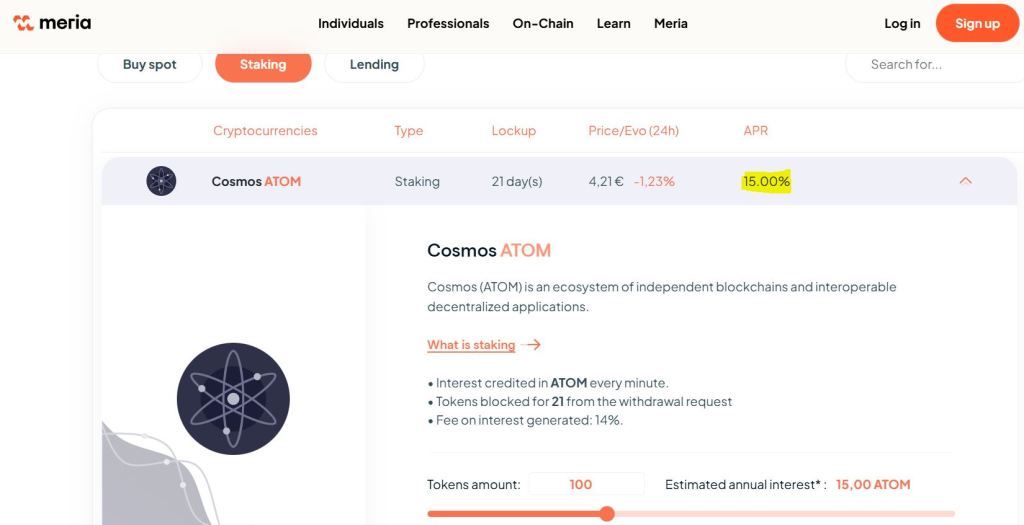
Do you know what staking is ? Staking on the blockchain refers to the process where participants lock up a certain amount of cryptocurrency to support the operations and security of a blockchain network. In return, they earn rewards, typically in the form of additional cryptocurrency. Staking is often associated with proof-of-stake (PoS) or similar consensus mechanisms used by many blockchains.
Partners :
