

Fundamentally, Cardano has regained investor attention after the official release of Hydra Node 1.0, a long-awaited scaling protocol designed to deliver lightning-fast, low-cost transactions. The protocol achieved speeds exceeding 1,000,000 transactions per second (TPS) during testing, positioning Cardano as a contender in high-throughput blockchain infrastructure.
Community reaction has been notably positive, with over 22,000 engagements on the official Hydra announcement post. Analysts suggest that sustained developer adoption around Hydra could reignite network activity and offset recent price stagnation, especially as ADA approaches critical technical thresholds.
Regarding that figure, the Hydra website explains that the number was mentioned “as a theoretical maximum, but the reality is more nuanced,” suggesting that one should wait for its implementation to verify its true impact.
Cardano’s founder, Charles Hoskinson, himself anticipated that “Hydra will have an incredible 2026,” referring to the potential its development could reach in the coming years.
Hydra-Node is part of the Hydra family, a Cardano Layer 2 (L2) chain designed to enhance the network’s scalability: allowing more transactions per second, with lower latency, reduced costs, and without overloading the main chain.
The role of Hydra-Node is to create “state channels” among a small group of participants, where a certain amount of ADA or main-layer assets is locked.
Within these channels, the parties can exchange transactions without recording each one on the main chain. This setup, similar to Bitcoin’s Lightning Network (LN), allows for increased speed and reduced operating costs.
In simple terms, each “Hydra node” manages those operations, records state changes, and coordinates the closing or updating of the channels.
The Cardano developer and delegated representative (dRep) known on X as Dori expressed his enthusiasm for the progress:
I honestly believe Hydra is on a completely different level compared to other scaling solutions. It’s more efficient, simpler, and incredibly fast.
— Dori, Cardano dRep
In January, when Solana suffered a network congestion issue, Hoskinson emphasized that upgrades like Hydra could handle such problems without any disruption or additional cost to builders.
The purpose of Hydra-Node is to ease the load on the Cardano main network, reduce costs, and improve transaction processing speed.
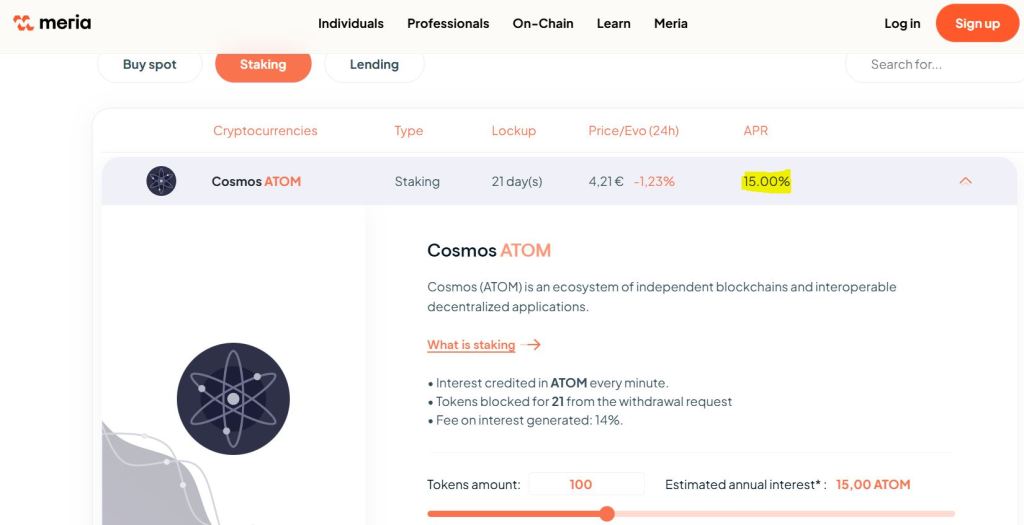
Do you know what staking is ? Staking on the blockchain refers to the process where participants lock up a certain amount of cryptocurrency to support the operations and security of a blockchain network. In return, they earn rewards, typically in the form of additional cryptocurrency. Staking is often associated with proof-of-stake (PoS) or similar consensus mechanisms used by many blockchains.
