

The Cardano Foundation develops authentication strategies in social security and educational tracking in collaboration with the Ministry of Labor, the National Technological University, and the Province of Entre Ríos.
‘Working with the Ministry of Labor of Argentina, the National Technological University, and the Province of Entre Ríos, with the support of major development banks, sets a powerful precedent for institutional adoption of blockchain, which can inspire similar initiatives across Latin America,’ stated Frederik Gregaard, CEO of the Cardano Foundation.”
According to the Cardano Foundation, the potential collaborations include:
- Social Security Benefits Authentication: Ensuring the secure certification of social security benefits for disabled workers.
- Authentication of Union Records: Providing proof of authenticity for national government union records.
- Collaboration on a Technology Hub in Entre Ríos: Supporting the creation of a new technological ecosystem in Entre Ríos focused on onboarding, educating, and promoting developers to build on Cardano and Aiken. This collaboration will involve the UTN (National Technological University) to foster business and solution development in the region.
- Student Tracking (Attendance Proof) and Digital Identities: Implementing a system to track student attendance and performance through digital identifications, improving the management of educational data for better fund allocation by development banks and optimizing the teaching and learning experience ( Atala PRISM ).
“Through these strategic initiatives in social security authentication, educational tracking, and regional technological development, we are creating a framework that demonstrates how blockchain can meet fundamental social needs,” stated Gregaard.
However, the Cardano Foundation indicated that the action initiatives are not limited to Argentina, as they are working on bringing the potential of blockchain to all of Latin America. According to their statement, the collaborations also extend to the Organization of Ibero-American States (OEI), the Development Bank of Latin America, and the Inter-American Development Bank.
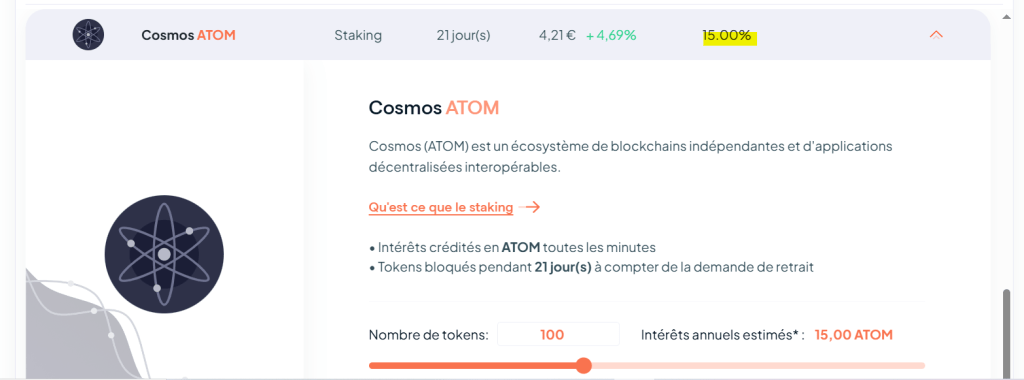
Do you know what staking is ? Staking on the blockchain refers to the process where participants lock up a certain amount of cryptocurrency to support the operations and security of a blockchain network. In return, they earn rewards, typically in the form of additional cryptocurrency. Staking is often associated with proof-of-stake (PoS) or similar consensus mechanisms used by many blockchains.
