
Cardano (ADA) is on the verge of a groundbreaking upgrade that could redefine its scalability and efficiency. According to Tim Harrison, EVP Community & Ecosystem at Input Output, the upcoming Leios upgrade will be a game-changer for the Cardano blockchain.
Hoskinson explained that the upgrade can potentially render Cardano substantially faster, up to 11,000 transactions per second (TPS). He also said it can provide “an infinitely scalable protocol” that will grow without affecting the system’s security or performance.
Leios is built to allow the blockchain to grow continuously while maintaining Cardano’s decentralization and security features. Hoskinson shared a graph showing how Leios could reach 11,000 TPS with different “input-block” configurations. He demonstrated how adding more input blocks in parallel before each ranking block could boost the network’s throughput.
The Leios update and the way forward
Sebastian Nagel, lead developer of Cardano’s Leios project, confirmed his new position earlier this year. He explained that the Input Output Engineering team spent the summer examining different protocol models.
Their work produced the Leios CIP-164 proposal, which was published four weeks prior to its update. Nagel said that the project will not be launched all at once. Instead, it will follow a phased approach.
The first stage, called Leios Lite, is designed to increase Cardano’s transaction throughput by 30 to 55 times.
After this step, the full Leios system will be introduced in later stages. The phased rollout has been described as a way to test performance before broader adoption. Essentially, by starting with Leios Lite, Cardano developers hope to learn how the system reacts under real-world conditions.
This will give the team the opportunity to refine and strengthen the protocol before scaling it up. Likewise, the Leios upgrade is part of Cardano’s long-term plan to address scalability. For some time, the network has been working to improve how it processes more transactions without reducing security.
In other Cardano news, with the new update underway, attention has now shifted to its gradual deployment.
Charles Hoskinson on the overall outlook
In another tweet, Charles Hoskinson, founder of Cardano and CEO of Input Output Global, acknowledged the “challenges and surprises” that lie ahead on the road to Omega but stressed its long-term significance. He said the upgrade would “solve the pillar of scalability once and for all,” and also unlock interoperability through Midnight and partnerchains.
Hoskinson added that governance is advancing toward becoming “recursively self-improving.” He went further to declare that Cardano is the “only true third-generation blockchain,” contrasting its approach with what he described as shortcuts taken by rivals.
One of the central components of the upgrade is Leios, a protocol designed to boost Cardano’s throughput. Hoskinson highlighted that Leios Lite, the first phase of its rollout, could deliver a 30- to 55-fold increase in network capacity.
Supporters have already called it a potential game-changer for transaction speeds and user engagement, as Tap Tools is expected to be vital for tracking adoption and activity on-chain.
According to IOG’s research sessions, Ouroboros Omega is the “final form” of Cardano’s proof-of-stake protocol. Work is progressing across eight dedicated streams, with a focus on fast settlement, sharding, congestion control, and fair transaction processing.
The team has also stressed that Leios is being developed to scale while maintaining the network’s existing security guarantees.
Hoskinson’s optimism about Omega builds on his broader bullish stance on Cardano’s market position. In recent weeks, he has pushed back against claims that only Bitcoin qualifies as “sound money.” He argued that Cardano shares the same characteristics, describing it as decentralized, resistant to inflation, and a reliable store of value.
Community members share this view, with some suggesting Cardano’s self-replenishing treasury and governance model strengthens its case.
Hoskinson has also insisted that Cardano is the “biggest threat” to Bitcoin’s dominance and is more resilient than Ethereum, which he claims faces structural weaknesses.
With Omega and Leios on the horizon, Hoskinson believes Cardano is on course not just to scale, but to redefine what a sustainable and decentralized blockchain can achieve.
Institutional Interest and Market Trends
In other news about Cardano, it is important to add that the project has also attracted the attention of major financial players. Lucas Macchiavelli pointed out that Franklin Templeton, a global asset manager with $1.6 trillion under management, is running Cardano nodes. This indicates an interest in understanding how the blockchain works, beyond retail participation.
Cardano has also earned recognition from companies. Reliance Global Group recently announced its first purchase of ADA as part of its digital asset treasury plan.
Moves like this suggest that institutions and companies are beginning to see the value of adding Cardano to their strategies.
Not Like Solana
Leios aims to match Solana’s speed, but without introducing centralization vectors or risking downtime. Combined with upcoming technologies like Hydra (Cardano’s Layer 2 state-channel system) and Midgard (an optimistic rollup platform), Leios forms a key pillar in a modular scaling stack that is designed to meet future user and institutional demand.
According to Hoskinson, Cardano is not just aiming for performance parity with faster chains—it is building with resilience, governance, and self-sovereignty in mind.
Citing the Edward Decentralization Index, Hoskinson stated that Cardano ranks as the most decentralized Layer 1 in the industry today. The platform boasts over 1,000 DReps (delegated representatives) under its on-chain governance framework—“twice as many as the U.S. Congress,” he quipped—and a community-ratified on-chain constitution, passed with an 85% approval rating.
The network also maintains a massive $1.5 billion treasury, controlled by the community and earmarked for ecosystem development, protocol upgrades, and strategic investment. “We’re close to finishing the roadmap we set out 10 years ago. The tools are coming online, and the Treasury ensures we can keep moving strategically—without having to bend to VC pressures or corporate shareholders.”
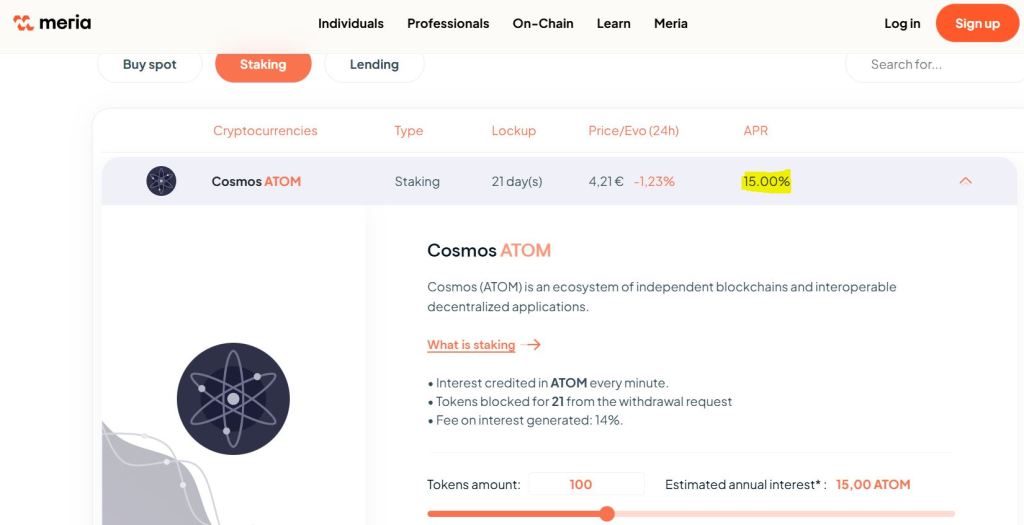
Do you know what staking is ? Staking on the blockchain refers to the process where participants lock up a certain amount of cryptocurrency to support the operations and security of a blockchain network. In return, they earn rewards, typically in the form of additional cryptocurrency. Staking is often associated with proof-of-stake (PoS) or similar consensus mechanisms used by many blockchains.
Partners :
