
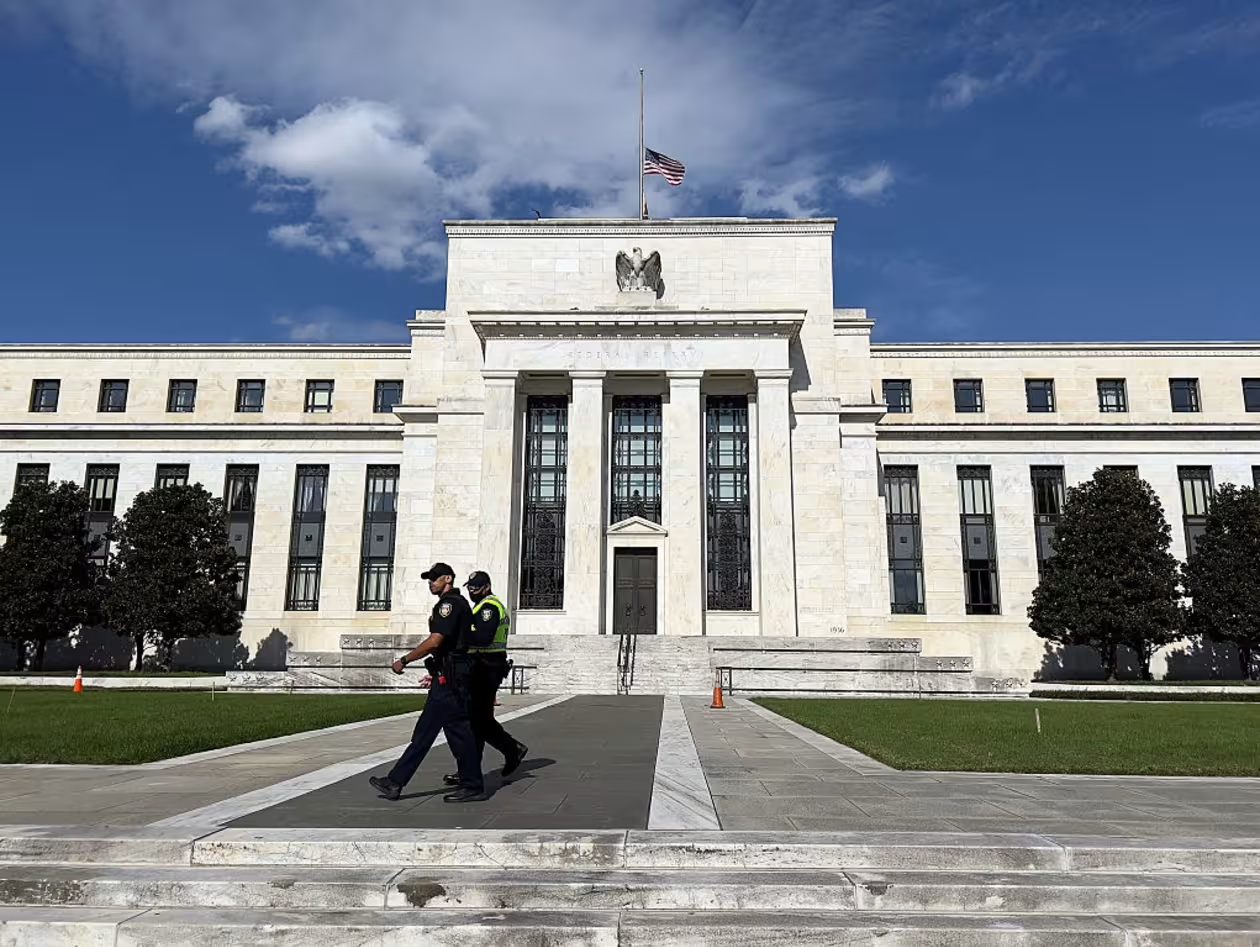
Coinbase, the largest cryptocurrency exchange in the United States, supports a Federal Reserve proposal to grant non-bank financial institutions access to special payment accounts.
The San Francisco–based exchange sent a letter to the United States central bank advocating for the creation of special-purpose Federal Reserve payment accounts. Coinbase argued that these accounts are essential for modernizing the national financial infrastructure.
Coinbase challenges the Fed over “restrictive” terms in payment systems.
The exchange argues that the proposal would allow fintech and crypto-native companies direct access to the Federal Reserve’s payment rails.
This change would enable these entities to use the core infrastructure of the global economy without needing a full commercial banking license.
Currently, most cryptocurrency companies rely on intermediary banks to settle dollar transactions. This process increases costs, slows settlement times, and adds counterparty risk to these services.
“By reducing reliance on FDIC-insured intermediary partner banks for core payment functions, the Payment Account would allow account-holding institutions to offer secure and efficient services to U.S. consumers and businesses, while also lowering costs and ensuring that new payment providers can scale as demand grows,” the exchange noted in its comments.
Faryar Shirzad, Coinbase’s Chief Policy Officer, also pointed out that this type of access is already available in the United Kingdom, the European Union, Brazil, and India.
Shirzad argued that in those jurisdictions there has been greater competition and settlement risks have been reduced, helping their financial sectors remain globally competitive.
However, the crypto industry giant warns that the current framework risks being “dead on arrival” due to overly restrictive limits.
Coinbase believes that the Federal Reserve’s current proposal contains “unnecessarily restrictive” limitations. According to the company, these restrictions could diminish the account’s usefulness for large-scale operations.
“Combining all the proposed restrictions risks unnecessarily limiting the account in a way that could prevent its adoption by institutions eligible for its intended use,” the exchange stated.
Specifically, the exchange criticized the absence of interest payments on end-of-day balances and the imposition of low limits on overnight balances.
Coinbase also urged regulators to reconsider what it called the “flawed” logic behind balance sheet limits. It noted that risks in payment services are primarily operational rather than credit-related.
“The risks associated with payment processing are operational and not credit, market, or liquidity risks, which typically require a capital buffer linked to balance sheet size. Therefore, a balance-sheet-based metric is not appropriate for this purpose,” the company wrote.
Additionally, the company supported the possibility of holding customer balances in “omnibus” accounts. The exchange led by Brian Armstrong argued that this would allow user funds to be pooled, making settlement more efficient.
By advocating for a “streamlined framework” that ensures commercial viability, Coinbase positions itself as a systemic player seeking to move from the periphery of finance into its regulated core.

Do you know what staking is ? Staking on the blockchain refers to the process where participants lock up a certain amount of cryptocurrency to support the operations and security of a blockchain network. In return, they earn rewards, typically in the form of additional cryptocurrency. Staking is often associated with proof-of-stake (PoS) or similar consensus mechanisms used by many blockchains.
