
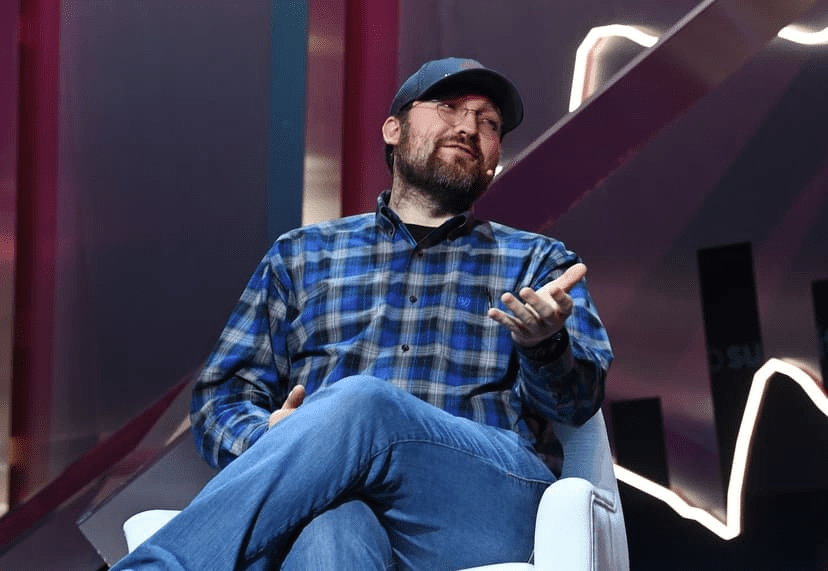
Cardano founder Charles Hoskinson publicly attacked Ripple CEO Brad Garlinghouse in a Jan. 18 video, accusing him of promoting a compromise on U.S. crypto legislation that would hand regulatory authority to the Securities and Exchange Commission and force new projects to operate under securities rules by default.
Hoskinson used a lengthy video monologue to criticize what he described as industry willingness to accept the U.S. Clarity Act, a bill he said has ballooned to include 137 amendments that would expand SEC oversight. He argued the legislation would require crypto projects to “go beg and plead” for regulatory relief.
Cardano Founder’s Main Issue With The Clarity Act
“You pass it – you own it forever”, insists Cardano’s founder, saying that Ripple’s CEO Brad Garlinghouse accepted the Clarity Act bill details simply because it’s “better than chaos”.
The sharpest criticism came when Hoskinson named Garlinghouse directly.
“Still got people like Brad saying well it’s not perfect but we just got to get something,” Hoskinson said. “Hand it to the same people who sued us. Hand it to the same people who put us out of business, who subpoenaed us, who put us in jail.”
Hoskinson invoked the Securities Exchange Act of 1933 to argue that flawed legislation becomes permanent. “93 years later, have we been able to change it? No,” he said. “You pass it, you own it forever.”
Hoskinson explained that he didn’t sign up for the blockchain-powered financial revolution to hand it all over to 15 centralized banks.
“Take the chaos & fight for what’s right”, – shouted the Crypto Cowboy, publicly digging at Ripple Labs choice to carry on further with the Clarity Act. Despite the initial enthusiasm, this digital asset regulating bill caused a fiery reaction among prominent crypto figures, including Coinbase CEO Brian Armstong, raising similar questions to Mr. Hoskinson.
Freedom vs. Compliance: Where’s The Silver Lining?
With the Clarity Act already counting over 130 amendments, the division between the two camps is getting fierce – opponents imply that the Clarity Act would simply hand over all the authority back to the United States Securities and Exchange Commission (SEC).
In Cardano (ADA) founder’s opinion, the current Clarity Act version would send the builders into a defensive posture. If the developers are in a “beg & plead” mode, this makes it hard for raw decentralized finance (DeFi) to survive, replacing it with enterprises that rely on lawsuits.
In a recent letter penned to the SEC, Ripple’s representatives were quick to acknowledge that “decentralization” might be a criteria too vague for legal matters. Ripple’s team asked the SEC to erase decentralization as a legal metric, as it’s “not a binary state”, resulting in “intolerable uncertainty”.
On the other hand, Ripple’s CEO Brad Garlinghouse & Cardano’s (ADA) Charles Hoskinson might have different motives, so the contrast in perspective is rational. For Ripple, it’s strictly compliance-first, something Ripple’s team had highlighted for a few years now. For Cardano, compliance plays a big part, but that’s not the core principle.
Charles Hoskinson recently launched the Midnight side-chain on Cardano (ADA), a cutting-edge legally-compliant privacy chain that’s supposed to solve some of the legal challenges that privacy’s OGs like Monero (XMR) & Zcash (ZEC) can’t. The project soared above $1 billion, matching the figures of Ripple’s RLUSD stablecoin, for which Ripple seeks a bank license.

Do you know what staking is ? Staking on the blockchain refers to the process where participants lock up a certain amount of cryptocurrency to support the operations and security of a blockchain network. In return, they earn rewards, typically in the form of additional cryptocurrency. Staking is often associated with proof-of-stake (PoS) or similar consensus mechanisms used by many blockchains.
