
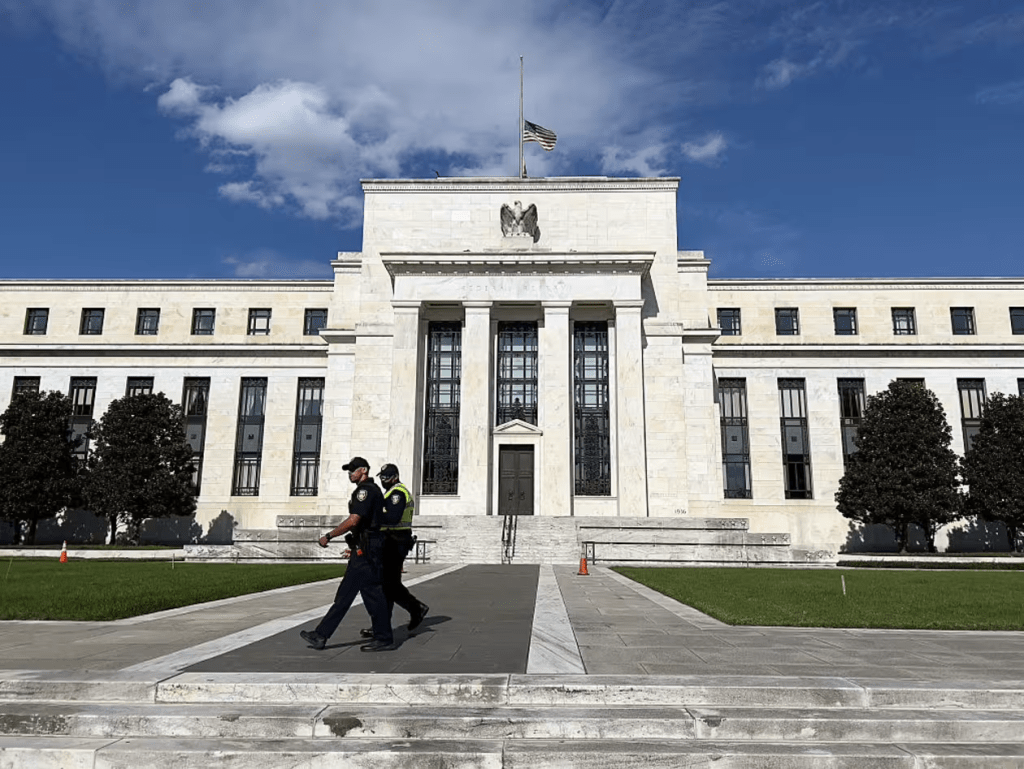
The profitability of U.S. bonds is rising ahead of the Federal Reserve’s final meeting of the year, at which another interest rate cut is expected. This is an anomaly in the debt market, since monetary policy easing should normally be accompanied by a decline in bond yields. The disconnect between U.S. bond yields and expectations for Fed rates is at levels not seen since the 1990s. Investors fear a renewed spike in inflation and that U.S. debt is too high relative to the economy’s growth.
The U.S. 10-year Treasury bond is trading with a yield of 4.18%. In other words, it reflects increased risk aversion among investors, shown in higher returns, compared to the period before the Federal Reserve (Fed) resumed interest rate cuts last September. Long-term U.S. Treasury yields are rising gradually, and this is not only because investors fear that the Fed is overlooking inflation concerns.
Although most experts believe the United States has avoided falling into a recession, investors are not buying U.S. debt due to a more flexible monetary policy. Fiscal policies proposed by Donald Trump and the expected rate cuts in 2026 are once again fueling fears that inflation could surge. The latest U.S. CPI rose to 3%, far from the Fed’s theoretical 2% target that would allow for true “price control.”
Adding to this is the replacement of Chairman Jerome Powell at the head of the Fed at the behest of the White House. While Trump prepares to install his own candidate and debates swirl over the future independence of the Federal Reserve, short-term bond yields are not falling in line with the Fed’s rate cuts. Nor are longer-term bonds, due to fears that the national debt will continue to grow as financing costs remain high for a giant like the United States.
If U.S. bond yields rise despite the rate cuts, mortgage rates, credit-card interest rates, and other loans stagnate or even increase. In other words, the borrowing costs paid by consumers and businesses rise, putting pressure on the economy. JP Morgan’s head of strategy, Jay Barry, believes that the Fed’s post-pandemic rate hikes were so abrupt that the market too quickly priced in subsequent easing. “By cutting rates even while inflation remains high, it is reducing the risk of a recession and limiting the room for yields to fall. The Fed seeks to sustain the expansion, not stop it,” Barry said, as quoted by Bloomberg.
The divergence between the Fed’s interest rates and the yield on U.S. Treasury bonds thus falls back on the American deficit. Total debt exceeds 37.6 trillion U.S. dollars and reaches 125% of national GDP, according to the latest data from the St. Louis Fed. In other words, it is just one percentage point away from its historical peak seen in 2020 with the pandemic-era stimulus plan. “With a growing budget deficit and opportunistic issuance of Treasury bills, the Fed will have no choice but to restart quantitative easing to avoid a repo market implosion — fiscal dominance under the pretext of maintaining financial stability,” commented Carmignac.
However, interest rates are currently far above the levels seen five years ago, when it was necessary to revive the economy to emerge from a recession. This led to high inflation, which persists today. For this reason, the Federal Reserve faces a dilemma if it decides to ease monetary policy with prices at these levels.
Steven Barrow, chief economist at Standard Bank, believes that this situation resembles what the Fed faced in 2000, when long-term debt yields were out of control. At that time, foreign savings were invested in U.S. debt. When they returned to their home markets—mainly Japan—it triggered a surge in U.S. bond yields.
“That excess savings has turned into an excess supply of bonds that keeps constant upward pressure on yields,” Barrow notes.
The effect of the Bank of Japan
However, the Fed is not the only institution that influences the price of U.S. bonds. The Bank of Japan is applying a monetary policy that runs counter to the Fed’s, and this is also contributing to keeping bonds such as the 10-year T-Note above 4.18%, driven by carry-trade operations between currencies and bonds from different regions. Just last week, the Bank of Japan (BoJ) consensus began to lean in favor of a rate hike. This means that the outlook for next year suggests a higher frequency of rate increases from G10 central banks than residual cuts.
Although expectations shift each week in response to major data releases—such as U.S. employment figures—the truth is that, at present, no significant changes are expected from the European Central Bank heading into 2026. Meanwhile, the Fed is expected to continue with its rate cuts and the BoJ with its hikes, according to OIS (overnight indexed swap) financial contracts.
This also helps explain why U.S. 30-year bond yields are now higher than they were when the Fed cut rates in September—and well above the levels seen at the time of the next rate cut in October. The trend in longer-term returns points to the risk that 5% could become a key reference point rather than a temporary ceiling, as it was last May. Currently, the yield stands at around 4.8%.
Meanwhile, German 30-year yields are set to rise even further after the ECB’s Isabel Schnabel said she is comfortable with investors’ bets that the next interest-rate move will be a hike, signaling that monetary easing in the eurozone has come to an end in this cycle.

Do you know what staking is ? Staking on the blockchain refers to the process where participants lock up a certain amount of cryptocurrency to support the operations and security of a blockchain network. In return, they earn rewards, typically in the form of additional cryptocurrency. Staking is often associated with proof-of-stake (PoS) or similar consensus mechanisms used by many blockchains.
