
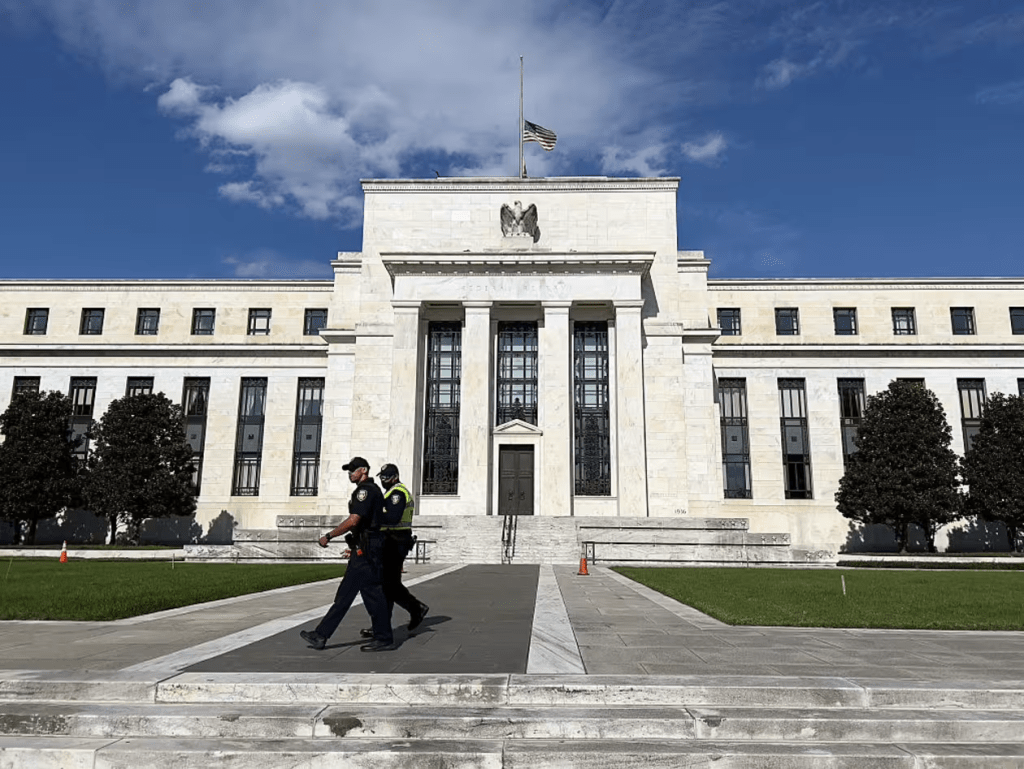
During a hearing before the House Financial Services Committee, Michelle Bowman spoke about several Federal Reserve projects. The Fed’s chief banking supervisor emphasized that they are working on new rules for the use of stablecoins among banks. These new regulations will be developed in accordance with the provisions of the Genius Act.
“As a regulator, my role is to encourage innovation responsibly, and we must continually improve our ability to supervise the risks to safety and soundness that innovation presents,” she said, as quoted by Bloomberg. The official added that new financial technologies can create a more efficient environment for the banking system.
The latter is positive for credit expansion, and it also allows for the leveling of fintech companies involved in innovation,” she stated. She emphasized that the work will move forward with other agencies to develop capital and diversification regulations for stablecoin issuers in line with the requirements of the Genius Act.
This implies requirements related to that legislation, which include obligations for issuers. In this way, the different federal agencies, such as the Fed, continue to prepare the ground for the widespread adoption of blockchain-based digital money. One of the Fed’s roles is to act as a provider of clarity regarding digital assets, Bowman noted.
The U.S. economy is paving its way toward the use of stablecoins
Since the approval of Genius, the financial sector has been working rapidly to create ecosystems related to stablecoins. This includes partnerships and the creation of their own tokens.
The expansion of the United States dollar could gain unprecedented momentum thanks to these assets. However, the fact that they are in private hands raises concerns about the sector’s resilience during times of stress.
In any case, the major financial players do not intend to fall behind in this race to dominate commerce with these tokens. The massive institutional and retail demand for cryptocurrencies has put large firms in a dilemma: either abandon their hostile stance toward cryptocurrencies or fall behind their competitors.
Moreover, some well-known foreign firms are also working on launching stablecoins in the U.S. market. The most recent case is Japan’s Sony Bank, which announced the launch in 2026 of a stablecoin intended for use in its video-gaming devices (PlayStation) and streaming services.
Amid the rise in interest in these assets, the Federal Reserve believes that banks and fintechs must have an environment that is both supportive and responsible. That is why Bowman emphasizes the need for new, specific regulations for the banking sector.

Do you know what staking is ? Staking on the blockchain refers to the process where participants lock up a certain amount of cryptocurrency to support the operations and security of a blockchain network. In return, they earn rewards, typically in the form of additional cryptocurrency. Staking is often associated with proof-of-stake (PoS) or similar consensus mechanisms used by many blockchains.
