
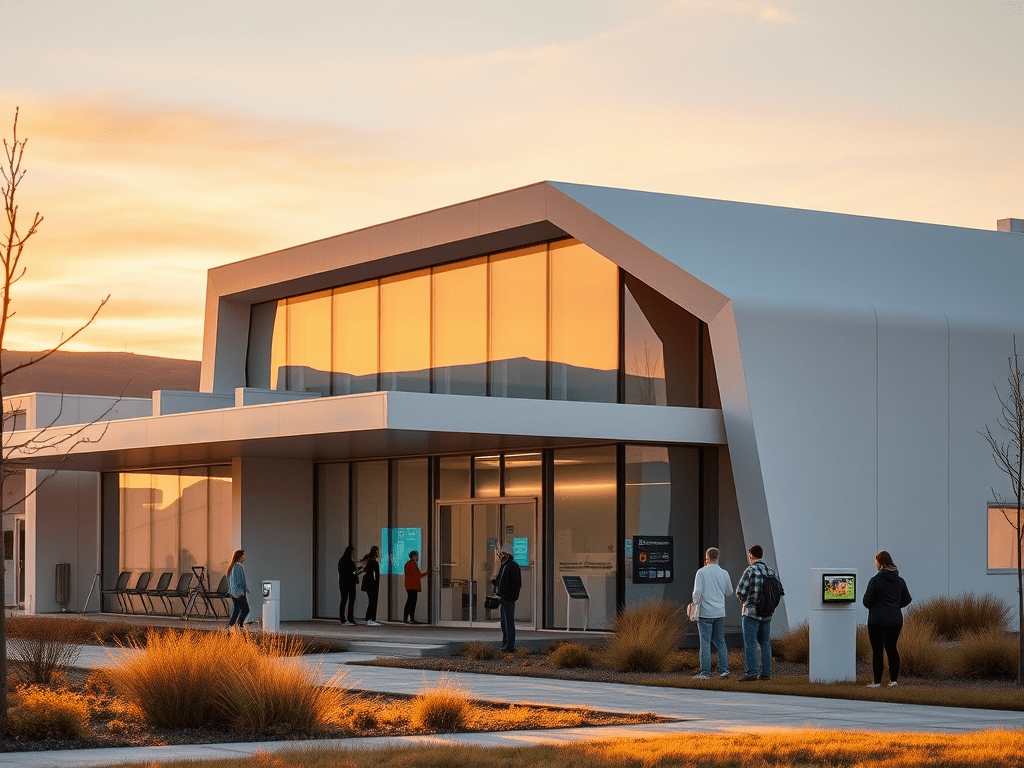
The founder of Cardano is investing 200 million dollars in building a clinic in Wyoming powered by AI and blockchain to demonstrate that healthcare can be more affordable, smarter, and more humane.
Charles Hoskinson, founder of Cardano and early co-founder of Ethereum, claims that the U.S. healthcare system is not broken — it is working exactly as it was designed. And that, he says, is the problem.
“The healthcare system is completely messed up in the United States. It’s just messed up. Everyone knows it’s true,” Hoskinson said in an interview at the Rare Evo conference in Las Vegas. “Yet everyone keeps trying to keep the system running because it’s too profitable.”
Although it may seem like harsh criticism, Hoskinson is backing up his words with actions: he is investing $200 million in a medical center in Gillette, Wyoming, which now serves about one-third of the city’s population.
His vision for his multimillion-dollar investment? ‘If they can’t pay, don’t charge them,’ he said.
So, what are the main problems with the current healthcare system that led him to invest millions in a new type of system? According to Hoskinson, it lies in the way doctors are compensated.
“All the financial incentives are simply horrible and wrong within the healthcare sector,” he told, using as an example how doctors are incentivized to treat all their patients the same way, regardless of their needs.
“Let’s say you are 75 years old and suffer from multiple comorbidities and you just don’t feel well… Your doctor will receive the exact same amount of money for treating you… as they will for treating a 16-year-old girl who comes in with a urinary tract infection and only needs about five minutes and some antibiotics.”
That economic structure, he said, discourages coordination, conversation, and long-term planning. “They have every incentive to keep you sick as long as possible, because they’ve developed chronic treatments for all those things,” Hoskinson stated.
And what is the source behind his sharp criticism of the healthcare system? “Because my father is a doctor, my brother is a doctor. My grandfather was a doctor, my uncle is a doctor,” Hoskinson declared.
The patient-centered solution
To solve this, Hoskinson suggests building a patient-centered facility, not one focused on billing codes or bureaucracies, and using cutting-edge technologies such as artificial intelligence and blockchain.
“Let’s build a clinic where we put the patient at the center. We form care teams, we use artificial intelligence, and we do everything in our power simply to provide patient-centered care that is accessible.”
AI, in this new system, will be used to support — not to replace — doctors. “Every day it can encompass the totality of all medical knowledge, and it can have agents that represent each medical specialty… and provide an updated care plan at the start of the day to the provider.”
The system, he said, can detect “subtle signals in the patient’s history” and assist with real-time audits. He also described plans for AI tools that could identify drug interactions, transcribe patient visits, and eventually act as an “AI companion” to help people interpret food, drug, and supplement labels.
The project’s architecture may also involve blockchain.
Hoskinson referred to selective disclosure and zero-knowledge technology — cryptographic tools that can verify facts (such as age or citizenship) without exposing the underlying personal details. “You can satisfy the intent and philosophy of those approaches without revealing the underlying client,” he assured.
He also plans to release the entire model as open source — including the protocols and software — to allow its replication elsewhere. “We’re not here to make a profit from [this],” Hoskinson said. “The goal is to open-source the code, release the software, you know, get that healthcare system out there.”
He is also pushing for a broader reset of policy. “Health insurance should be like the way you buy it in case you get seriously ill,” Hoskinson said. “It doesn’t make sense to say, well, it’s for when you get a little cut or when you want to get contraceptives or something like that.”
However, Hoskinson claims that this new healthcare model is facing resistance from the traditional medical system.
“The hospital there is trying to kill us,” he alleged.
“They do everything possible to make our lives miserable. Uh, they don’t accredit our doctors. So it takes six to twelve months to get credentials so they can practice medicine. I bring in a world-famous surgeon and a renowned transplant surgeon. They don’t grant them credentials,” Hoskinson said.
While Hoskinson’s fight to reform the healthcare system may resemble a David versus Goliath scenario, he sees it as part of his legacy and his family’s. “I invested $200 million of my own money into my clinic and we’ve been building for the past three years, and I really want to solve this problem,” he declared.
“I believe it is my legacy and the family’s legacy, and it is also the most important thing in the United States.”

Do you know what staking is ? Staking on the blockchain refers to the process where participants lock up a certain amount of cryptocurrency to support the operations and security of a blockchain network. In return, they earn rewards, typically in the form of additional cryptocurrency. Staking is often associated with proof-of-stake (PoS) or similar consensus mechanisms used by many blockchains.
