

Japan proposes reforms allowing banks to hold crypto and offer trading through subsidiaries.
Japan is on the verge of a major overhaul in how its banks interact with cryptocurrency. The Financial Services Agency (FSA) is proposing reforms that would allow Japanese banks to hold digital assets for investment purposes, marking a major move that breaks with current rules.
Under the plan, banks’ securities subsidiaries could also register as crypto-asset service providers (CASPs), giving them the ability to offer trading and exchange services directly to clients.
Regulators say the goal is to bring crypto into the mainstream financial system while protecting investors through established, trusted institutions.
Japan’s major banks, including Mitsubishi UFJ, Sumitomo Mitsui, and Mizuho, are among the largest in the world by assets and maintain extensive international operations. Their potential entry into crypto could not only expand domestic adoption but also influence global trade, investment, and cross-border digital asset activity.
Currently, despite the push toward wider adoption, the FSA remains cautious about risks, particularly price volatility, and plans to require banks to issue clear warnings about potential losses.. If approved, the reforms are expected to take effect by the end of 2025.
The FSA announced that its “Working Group on Crypto Asset Systems” will hold its fifth meeting next Friday, November 7, highlighting that regulatory discussions are ongoing.
Rapid Adoption Drives Change
Japan has long been a pioneer in crypto regulation. It was one of the first major economies to establish a formal licensing system for exchanges in 2017, giving the market legal clarity and investor protection.
Crypto adoption in the country has skyrocketed. By February 2025, more than 12 million accounts were registered—a more than threefold increase over five years—placing Japan among the top nations for crypto adoption per capita.
Activity on the blockchain has kept pace with this growth. From July 2024 to June 2025, the total value of crypto received in Japan jumped 120% year-on-year, highlighting the country’s expanding role in the global digital asset ecosystem.
Banks, stablecoins, and a regulated sandbox
The new “Payment Innovation Project” establishes a simple protocol: several Japanese banks are jointly testing the issuance and circulation of payment tokens within a supervised framework.
The goal is not to announce yet another stablecoin, but to identify what breaks down when real institutions sit around the same table: KYC compliance, interbank flows, reserve segregation rules, and par-value redemption mechanisms.
This isn’t marketing — it’s market engineering. Japan had already paved the way with earlier experiments involving yen-pegged tokens.
This new step aims to validate the entire chain, from issuance to settlement. If the trial proves successful, the country will be able to plug tokenized rails into real-world applications: merchant payments, B2B transfers, and low-cost cross-border transactions.
The shift will not depend on promises, but on the banks’ ability to jointly operate frictionless programmable payments.
Why this framework can be a game changer
Tokenized payments only progress when three conditions align: a total cost lower than existing rails, a user experience that doesn’t require being “crypto-native,” and compliance that legal teams can clearly interpret. The model chosen by Japan checks all these boxes.
Cost: issuance and settlement are pooled, meaning fewer intermediaries.
UX: the end user pays in digital yen just as they would with a card—the complexity stays on the back end.
Compliance: testing happens in a controlled environment, with official documentation to back it up, before opening more broadly. The country has already learned from past attempts where tokens were announced first and blind spots discovered later.
Here, the logic is reversed: first, a solid interbank protocol—then scaling up. And since the initiative involves several major groups, the question of interoperability is addressed from the start.
Lending, Staking, and IEOs: The Rules Are Tightening
We’re not talking about stifling innovation, but about preventing promises of “10% annual returns” from turning into outright losses after a poorly understood lock-up. Japan has already seen hybrid products go through cycles of hype followed by panicked withdrawals.
By enforcing market discipline upfront, it protects the flows that truly matter for tokenized payments — those from companies and institutions that only approach a protocol when accountability is clear. This tightening doesn’t block innovation; it filters it.
Serious players gain predictability. The others will have to rethink their offerings or leave the market.
The Japanese strategy clarifies a central point: the value of tokenization is not proven by “TVL,” but by payments. Merchants being settled faster, corporate treasuries shortening settlement times, cross-border transfers no longer eating into margins.
In this framework, flashy yield-bearing products become secondary. They don’t drive demand — they distort it.
That’s why the regulatory vise is tightening wherever the promise is financial rather than utilitarian. The logical next step would be a public timeline: pilot scope, published indicators, and criteria for moving into production.
And, in the medium term, bridges to other Asian markets interested in local-currency payments built on shared technology. Japan is playing a credibility card — showing that tokenized rails can coexist with strict supervision.
If the balance holds, it will have set a useful precedent for those seeking useful stablecoins and healthier markets.
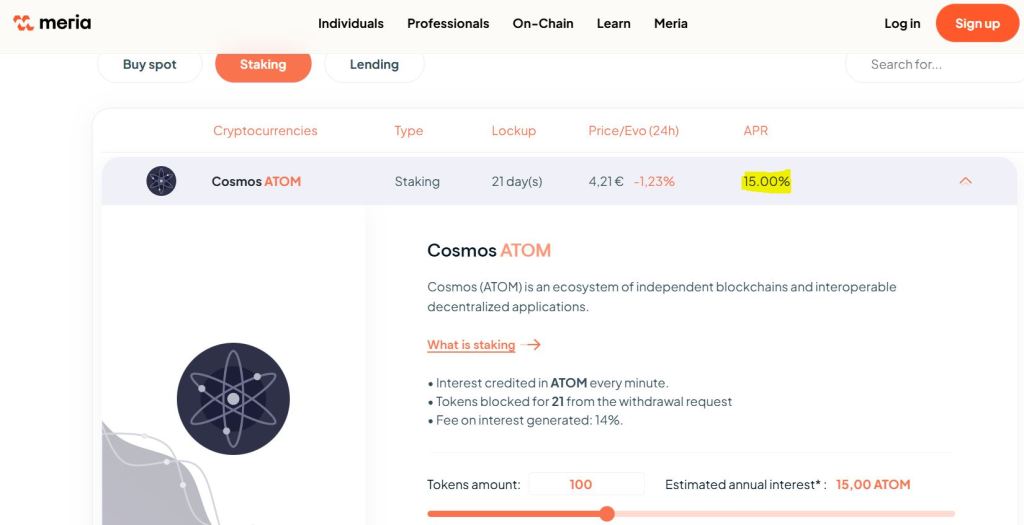
Do you know what staking is ? Staking on the blockchain refers to the process where participants lock up a certain amount of cryptocurrency to support the operations and security of a blockchain network. In return, they earn rewards, typically in the form of additional cryptocurrency. Staking is often associated with proof-of-stake (PoS) or similar consensus mechanisms used by many blockchains.
