

Cardano is receiving increasing attention as Charles Hoskinson presents a vision focused on how blockchain networks will evolve toward a more automated and user-friendly environment. In a conversation with Crypto Crow, he explained that intent-based systems allow users to express what they want to achieve, while the infrastructure executes the operation through different protocols. He illustrated this by mentioning how everyday purchases already rely on automated background processes, even though the user simply expresses the intention to pay.
Mintern, a collaborator associated with Cardano’s DEX Minswap, recently shared analyses highlighting that Cardano’s architecture naturally aligns with this model.
The network’s design promotes efficiency, clarity, reliability, and verifiable outcomes — all essential characteristics for intent-based decentralized finance.
The Strength of Cardano’s Extended UTxO for Automation
Cardano’s Extended-UTxO ledger works together with Plutus validators to ensure clear and predictable transaction outcomes before submission. This allows a wallet or dApp to construct the transaction while already knowing how it will behave once confirmed on-chain.
The Vasil upgrades introduced reference inputs, inline datums, and reference scripts, which reduce friction and fees for automated execution. CIP-30 enables secure interaction between wallets and dApps, while developers rely on the shared Plutus Application Backend and SDK to coordinate off-chain processes.
There are already real-world examples on Cardano. DEXs use batchers that collect swap or liquidity orders with defined conditions and efficiently settle them in a single transaction. This mirrors how solver systems could scale to additional use cases — from lending to real-world asset transfers.
Meanwhile, Hydra continues to advance fast settlements that preserve the same off-chain logic before returning to the base layer, supporting high-performance use cases.
Greater Adoption and Multichain Potential
Other ecosystems are exploring intent-based methods through solutions such as UniswapX, CoW Protocol, and smart account standards. Cardano takes a different path by offering deterministic execution and the ability to encode intent as UTxO data. NEAR’s inclusion of ADA in its intents platform demonstrates how Cardano could more easily integrate into multichain routing and cross-chain automation in the future.
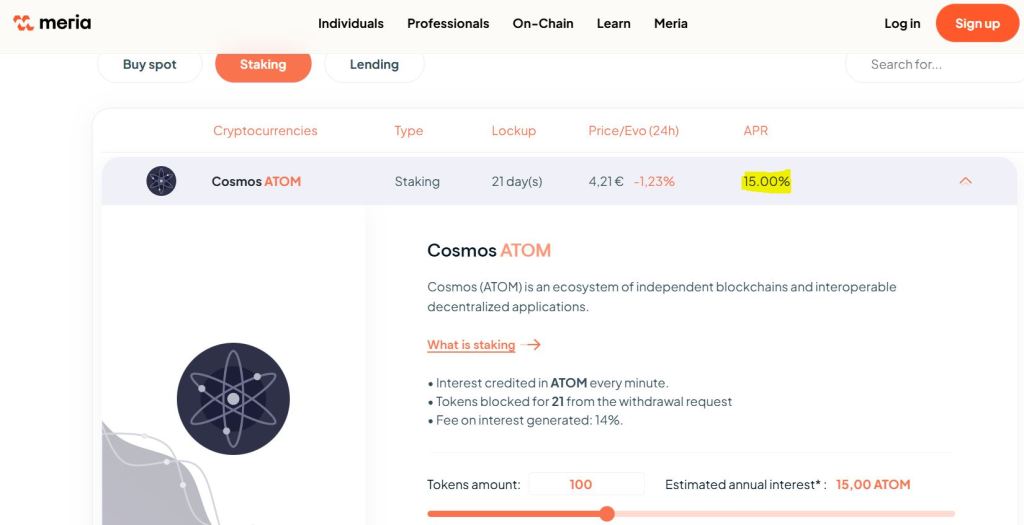
Do you know what staking is ? Staking on the blockchain refers to the process where participants lock up a certain amount of cryptocurrency to support the operations and security of a blockchain network. In return, they earn rewards, typically in the form of additional cryptocurrency. Staking is often associated with proof-of-stake (PoS) or similar consensus mechanisms used by many blockchains.
