

Hong Kong’s regulatory lead signals a new era for digital assets, as crypto attracts global investors and reshapes the future of finance.
Hong Kong-based MicroBit Capital Management has launched its long-anticipated spot bitcoin and ether exchange-traded funds (ETFs), marking a milestone for the city’s ambitions to become Asia’s regulated hub for digital assets. The listings arrive amid record-high cryptocurrency prices and an era of increasing regulatory acceptance across global markets.
“Now I believe everybody considers bitcoin, or cryptocurrencies, as quite an important asset class; it’s no longer a scam,” said Kenny Khuong, Chief Investment Officer of MicroBit Capital, during the funds’ debut on the Hong Kong stock exchange. “Cryptocurrency is entering a new phase suitable for mass adoption.”
Khuong noted that greater institutional participation will help stabilize crypto volatility, while regulatory clarity in markets like Hong Kong and the US will expand the utility of digital assets and strengthen investor confidence.
MicroBit’s ETFs directly hold the underlying assets — unlike futures-based products — reducing tracking error and inefficiencies. The Ether Spot ETF also allows for staking up to 30% of holdings, with rewards reinvested into the fund, a feature designed to boost returns while maintaining full asset ownership.
The funds are supported by institutional infrastructure: Hash Blockchain Limited provides trading via its licensed virtual-asset platform, and HashKey Custody Services acts as sub-custodian. Both ETFs are traded in HKD and USD and regulated under Type 1, 4, and 9 licenses from the Hong Kong Securities and Futures Commission.
Their launch follows Hong Kong’s decision earlier this year to approve Asia’s first spot crypto ETFs, putting the city ahead of regional peers in regulated access to virtual assets. Analysts say this positioning could attract capital from investors seeking diversified exposure outside US markets — though competition will intensify as US spot ether ETFs expand.
“Crypto is now part of the global financial system,” Khuong said. “We’re witnessing the beginning of true integration between traditional finance and digital assets.”
The regional balance of cryptographic forces is shifting as Japan is ‘Ready to Explode’
On the sidelines of Token2049 in Singapore, crypto industry leaders kept returning to the same theme: Tokyo is becoming the new crypto capital of the region.
Conventional wisdom holds that the battle to become Asia’s crypto hub is a competition between Singapore and Hong Kong. Both cities have English as an official language and use a Western-inspired common law system in their judiciary.
But at Token2049, leaders were not debating whether Singapore or Hong Kong would claim the title of Asia’s crypto hub. Instead, they were discussing how Japan—once seen as over-regulated—had quietly become the region’s most credible market in terms of actual trading volume, staking infrastructure, and institutional growth.
“Japan didn’t have regulations for a long time—don’t forget, that’s where cryptocurrency essentially originated—then the rules became very strict, and nothing happened for a long time,” said Konstantin Richter, CEO of Blockdaemon, to CoinDesk at Token2049. “But people kept pushing, and now they effectively have a regulatory infrastructure that is institutionally scalable and ready to take off. Here [in Singapore], it was free fall, and they’re only now starting to implement regulations.”
Singapore acted quickly, then tightened its regulations. It opened its doors early to crypto companies, building a reputation as a testing ground for innovation in Asia. It worked—until it didn’t.
The collapse of FTX and other failures exposed insufficient consumer protections, prompting the Monetary Authority of Singapore (MAS) to move toward increased oversight in 2024. The result: higher compliance costs, mandatory custody segregation, external audits, and a slower licensing process. Those unwilling to comply have to leave, even if they don’t serve Singapore-based clients. That’s a lot of work for a relatively small market.
“Singapore was so crypto-friendly that everyone wanted to come here,” Richter said. “Then it grew, events happened, and suddenly you think, wait a minute, we need stricter rules.”
Japan, on the other hand, completed its rigorous regulatory work several years ago.
Following Mt. Gox (2014) and Coincheck (2018), Japanese regulators had already imposed strict rules regarding licensing, segregation, and onshore custody long before the collapse of FTX.
By 2025, instead of tightening further, Japan is slightly opening up: allowing institutional staking, establishing a pathway for crypto-backed ETFs, and clarifying how companies can offer yields.
Unlike Singapore’s approach, which prioritizes innovation first and regulation later, Japanese regulators drafted detailed rules years ago on asset custody, segregation, and security. Exchanges are required to hold clients’ assets separately and use national validators, thereby creating an environment favored by institutional investors.
Richter stated that Asian clients, particularly in Japan, are willing to pay for institutional-grade infrastructure, which contrasts, he noted, with Europe, where clients are generally more price-sensitive.
The shift is not only regulatory.
Japan’s nearly invisible yields—the Bank of Japan only ended negative interest rates last year—make staking exceptionally attractive: a 3% yield in ETH is 30 times higher than national Treasury yields. This is why Blockdaemon and other node operators view Tokyo as the next major destination for institutional staking flows.
The derivatives exchange platform BitMEX is also taking note. In a recent interview with CoinDesk, BitMEX CEO Stephan Lutz stated that the platform had just moved its data center to Amazon Web Services’ facility in Tokyo in order to be closer to the heart of the activity.
Japan’s cryptocurrency regulatory framework, once criticized for being overly strict, now gives it a clear advantage: predictable oversight, investor protection, and increased institutional yield.
The question now is how the usual hubs of Hong Kong and Singapore will compete.
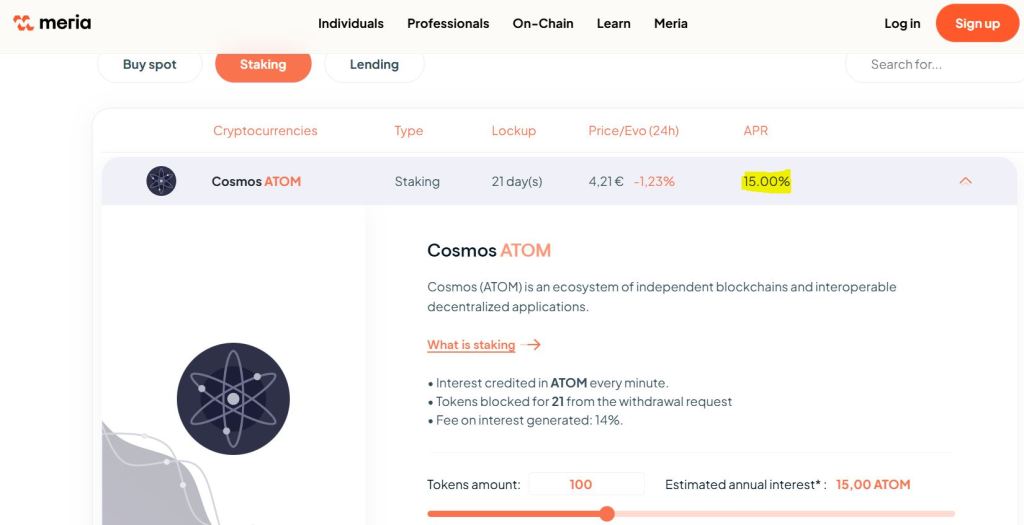
Do you know what staking is ? Staking on the blockchain refers to the process where participants lock up a certain amount of cryptocurrency to support the operations and security of a blockchain network. In return, they earn rewards, typically in the form of additional cryptocurrency. Staking is often associated with proof-of-stake (PoS) or similar consensus mechanisms used by many blockchains.
