

The Cardano Tech Summit LATAM 2025 is shaping up to be one of the most anticipated events in the blockchain ecosystem across Latin America. Following the success of previous initiatives such as Cardano Tech Week, this expanded edition aims to connect, educate, and inspire developers, businesses, academics, and enthusiasts from across the region.
The Latin American edition will feature two key stops: Rio de Janeiro (October 2025) and Buenos Aires (November 2025) — the latter being the grand finale. In Buenos Aires, the event will take place on November 15 at the 0+Infinito Pavilion of the Faculty of Exact and Natural Sciences at the University of Buenos Aires (UBA), starting at 2:00 p.m.
“It’s a meeting between two cultures of scientific rigor: the blockchain that was born from peer-reviewed papers and the faculty that has trained generations of Latin American scientists,” said José Iadicicco, Director of ADA Solar and organizer of the event.
For the Rio de Janeiro edition, the Cardano Tech Summit LATAM 2025 presents a comprehensive and technical agenda. The event will take place on October 15 at the Museu do Amanhã, featuring a day that begins with networking and a welcome breakfast, followed by keynote presentations in the main auditorium and panels on governance and institutional adoption, with confirmed participation from organizations such as SERPRO, Petrobras, the Securities and Exchange Commission (CVM), and FINEP.
The program also includes a keynote by Input Output Global (IOG), demos of the SAF project, educational panels, and a closing session featuring a laptop raffle and a cocktail powered by Binance.
At the same time, parallel sessions will be held in secondary spaces, covering topics such as DeFi on Cardano, dApp development using the UTxO model, Zero Knowledge (ZK) use cases, and educational innovation.
The Summit will offer a full day of keynote talks, themed panels, specialized workshops, and a regional hackathon. The hackathon will kick off between November 14 and 15, inviting Latin American developers to build innovative solutions on the Cardano network.
The scientific and academic rigor of Cardano in Latin America
Cardano has established itself as the leading scientific blockchain network, according to Iadicicco, with more than 260 academic papers published by top-tier cryptographers and mathematicians such as Aggelos Kiayias, Philip Wadler, and Lars Brünjes.
Its methodology, based on peer review and formal mathematical foundations, aligns perfectly with the tradition of scientific rigor that characterizes the Faculty of Exact and Natural Sciences at the University of Buenos Aires (UBA), the historic home of the region’s foremost mathematicians and computer science experts.
From the organization, they shared a preview of the content and activities to take place during the event:
- Talks by key figures from the global Cardano ecosystem
- Specialized technical workshops
- Booths featuring projects, universities, and developers
- Awards ceremony for the regional hackathon
- A QR Hunting activity designed by SEAD, with exclusive prizes
- Aikido and Kendo exhibitions, Taiko drumming, and other Japanese arts
- Simultaneous chess matches and exhibitions led by the Women’s Olympic Chess Team
The cultural activities pay tribute to Cardano’s origins in Osaka, Japan, “creating a bridge between the Japanese philosophy of technical perfection and the warmth of the Latin American community.”
Representatives from ADA Solar emphasized that the region has shown a growing interest in scientifically grounded blockchain solutions, especially in contexts of high economic volatility where decentralization and cryptographic security gain practical relevance.
“We want the Buenos Aires Summit to be a space where the community can learn, create, have fun, and celebrate together. Cardano was born in Japan with the rigor of formal science, but today it beats strongly in Latin America, where that same scientific rigor resonates in institutions like the UBA,” concluded Iadicicco.
The event aims to be inclusive and accessible to all members of the blockchain community — from experienced developers to students and enthusiasts who are just getting started in the ecosystem — as emphasized by the organizers, who also highlighted that registration is free of charge.
For more information about the event, the Smart Contracts course, or the hackathon, you can visit the official event website at the following link. Registration for the event is available through this link.
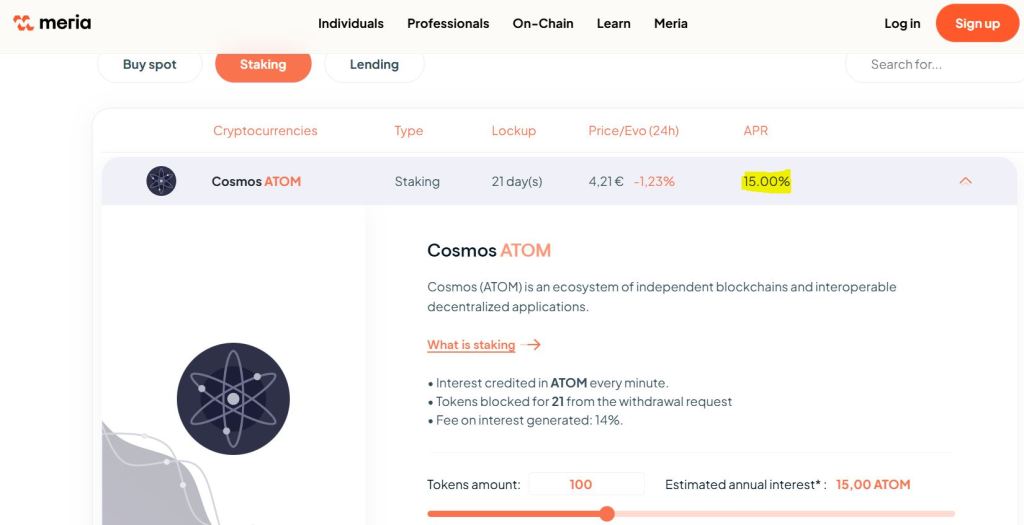
Do you know what staking is ? Staking on the blockchain refers to the process where participants lock up a certain amount of cryptocurrency to support the operations and security of a blockchain network. In return, they earn rewards, typically in the form of additional cryptocurrency. Staking is often associated with proof-of-stake (PoS) or similar consensus mechanisms used by many blockchains.
