

Apex Fusion has unveiled Vector, a Cardano-aligned blockchain that claims to offer instant finality and 10 times the transaction speed, at Rare Evo (August 6–10, 2025).
Blockchain services firm Apex Fusion is set to launch Vector, a high-performance Cardano-aligned blockchain designed for institutional users entering the Web3 space.
Vector is a testnet of the peer-reviewed, UTxO-based blockchain, offering institutional-grade performance and the promise of instant transaction finality. It will be officially launched at the Rare Evo conference on Saturday, according to a statement from Apex Fusion.
This makes it the first Cardano-aligned blockchain to achieve independently verified instant finality—the guarantee that a transaction is irreversible—according to the announcement.
Vector’s transaction throughput is 10 times faster than Cardano’s mainnet, with 99% of transactions reaching finality in 13 seconds, while 98.6% of transactions achieved instant finality under “performance-optimized conditions,” according to an independent report by Cardano architect and Well Typed director Duncan Coutts, along with Predictable Network Solutions co-founders Neil Davies and Peter Thompson.
The joint report, commissioned by the Apex Fusion Foundation, will be published at Rare Evo alongside the official launch of the testnet.
“Vector demonstrates how the UTxO model can evolve to meet institutional demands without compromising its fundamental robustness,” Coutts said.
Prolonged transaction finality times have long been a limitation restricting the utility of blockchain-based financial applications.
The new instant finality network introduces “significant advantages” for both blockchain infrastructure and financial institutions, according to Anja Blaj Zajc, Head of Legal Affairs at the Apex Fusion Foundation.
“For blockchains, it reduces the risk of chain reorganizations and double spending, enhancing security and reliability,” Zajc said, adding:
For financial institutions, instant finality enables real-time settlement, reduces operational risk, and improves compliance by providing clear and immediate confirmation of transactions.
Instant finality can introduce faster payments, more efficient cross-border transactions, and the development of “more complex on-chain financial products,” it added.
By comparison, Sony’s Soneium Fast Finality Layer, a layer-2 network specifically designed to reduce blockchain finality time, only boasts a transaction finality of under 10 seconds.
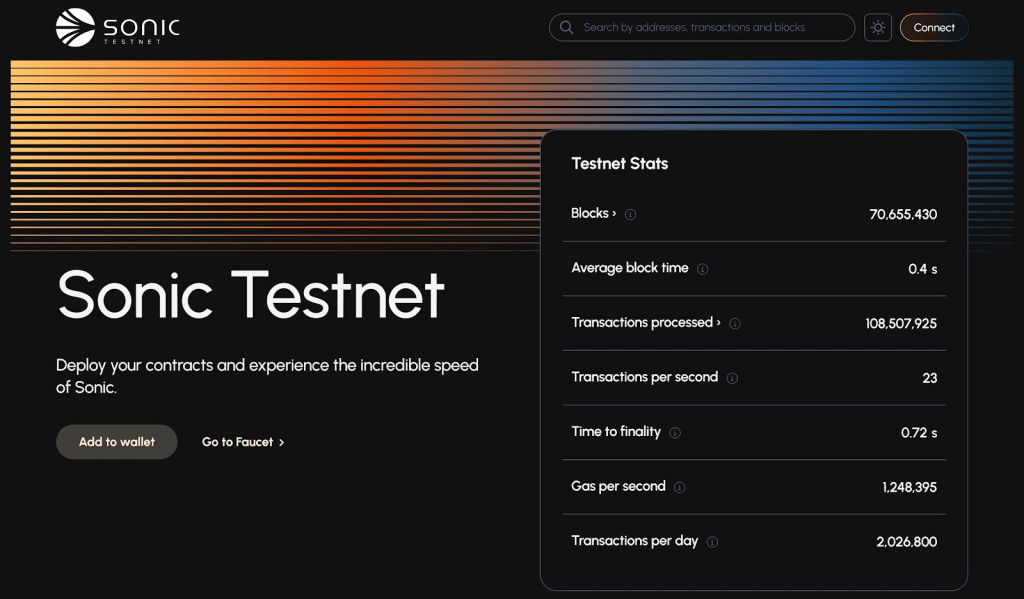
Sonic (formerly Fantom) achieved a transaction finality of 720 milliseconds in a testnet environment, according to a September 2024 report.
While testnet environments can boost the performance of a blockchain, this makes Sonic the fastest Ethereum Virtual Machine (EVM) blockchain in the world, according to Andre Cronje, the creator of the Fantom Network and Chief Technology Officer of Sonic Labs.
The Apex Fusion Foundation is working to comply with MiCA
To better serve institutional needs, such as the issuance of compliant stablecoins, the Apex Fusion Foundation said it is working to fully comply with Europe’s Markets in Crypto-Assets Regulation (MiCA.
“Apex is fully aligned with Swiss regulatory requirements and has obtained a resolution from FINMA confirming the classification of the AP3X token,” said Zajc, adding:
“In parallel, the foundation is preparing to notify the relevant national competent authority within the EU, with the aim of achieving full compliance under the MiCA regulation.”
MiCA is the world’s first comprehensive regulatory framework for crypto-assets, which came fully into effect for crypto-asset service providers on December 30, 2024, with the goal of enhancing investor protection, preventing fraud, and addressing the management of stablecoin reserves.
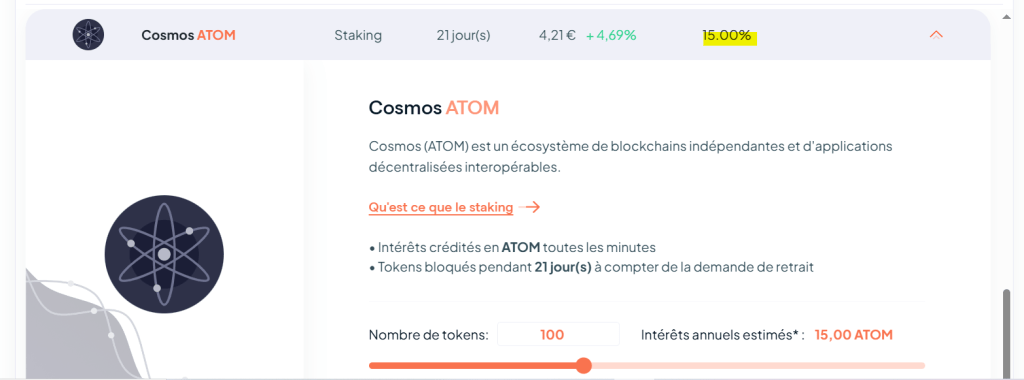
Do you know what staking is ? Staking on the blockchain refers to the process where participants lock up a certain amount of cryptocurrency to support the operations and security of a blockchain network. In return, they earn rewards, typically in the form of additional cryptocurrency. Staking is often associated with proof-of-stake (PoS) or similar consensus mechanisms used by many blockchains.
