

Charles Hoskinson predicts that SWIFT and other legacy payment systems will be replaced by easier and more efficient alternatives.
Speaking in an interview with David Lin, Hoskinson argued that SWIFT and other legacy financial systems were too complicated and inefficient, and that eventually more efficient alternatives would usurp them.
In a crypto market that chases fleeting trends, Cardano (ADA) moves with the steady confidence of a long-distance runner. It’s a project that favors peer-reviewed papers over flashy marketing, building its future on a foundation of scientific rigor.
While rivals rush to capture headlines, Cardano is quietly assembling the pieces for a dominant run by the end of the decade, betting that substance will ultimately outlast hype.
Built on proofs, not promises !
The rest of crypto often lives by the mantra “move fast and break things.” Cardano’s engineers would rather move slow and build things that last. This disciplined approach means that before a single line of code hits the main network, it has been debated, torn apart, and verified by academics. Critics point to the slower development cycle, but this painstaking process has built a fortress-like network that has sidestepped the catastrophic exploits and embarrassing outages seen elsewhere.
This isn’t random – It’s a five-act play for building a blockchain, with each stage named for a historical thinker: Byron (the groundwork), Shelley (the move to community control), Goguen (unleashing smart contracts), Basho (making it faster), and Voltaire (giving the community the keys).
Beyond theory – Cardano’s 2025 reality check
Any talk of Cardano being a “ghost chain” died for good in 2025. The network is now humming with creation. By the middle of the year, developers had spun up over 1,300 projects and launched more than 17,400 Plutus smart contracts. Users have followed the developers’ lead, with the number of wallets climbing past 4.8 million and daily transactions settling at around 2.6 million.
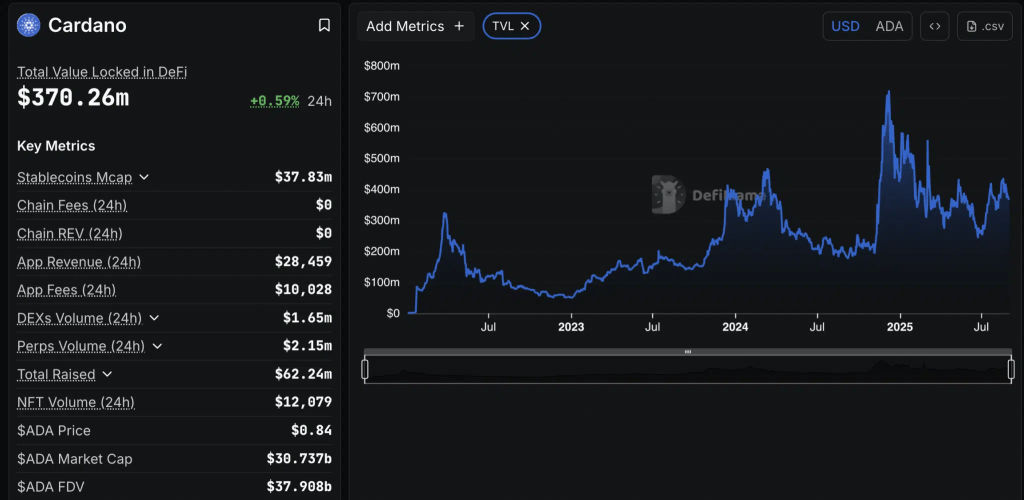
Its DeFi scene highlighted similar grit. The total value locked (TVL) in Cardano’s financial protocols hit a respectable $349 million by mid-August 2025. That figure even spiked to $431 million in June after connecting with the Base network – A sign that real capital may be finding a home here.
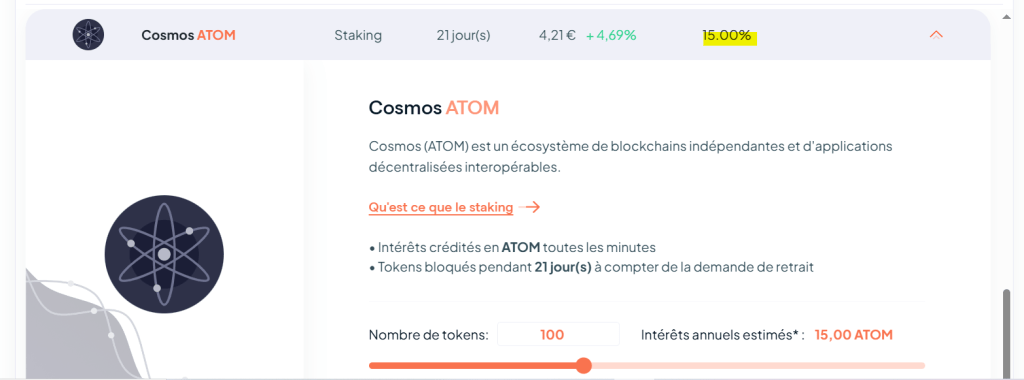
Do you know what staking is ? Staking on the blockchain refers to the process where participants lock up a certain amount of cryptocurrency to support the operations and security of a blockchain network. In return, they earn rewards, typically in the form of additional cryptocurrency. Staking is often associated with proof-of-stake (PoS) or similar consensus mechanisms used by many blockchains.
