

“Governance is how decisions are made on the network. Blockchain is decentralization — a set of nodes that maintain interoperability, and this also means being able to make decisions about that network,” shared Mauro Andreoli, Cardano Ambassador and Representative of Input Output (IO) Buenos Aires, in a conversation with Cointelegraph en Español, during the Blockchain Summit Global in Montevideo, Uruguay.
“Cardano has been innovating for some time now in everything related to decentralized governance systems,” he stated.
According to Andreoli, many people currently define Cardano as a digital nation, and although he believes that may not be the most accurate definition, he defended how the Cardano network has incorporated concepts of liquid democracy that, in many ways, surpass current democratic systems.
“As a lawyer, I believe these concepts bring together the best of both direct and representative democracy,” he added.
Building Decentralized Trust Systems
Andreoli noted that Cardano’s treasury currently holds a budget of 1.7 billion ADA, which, at the current market price, equals approximately USD 1.5 billion. “And although it might seem unbelievable, it is the Cardano community itself that decides how that money is spent,” he said.
He went on to explain that the key question is how to build a trust system in which the user community decides what is done with the capital. Cardano’s answer is a decentralized and liquid governance system.
“What Cardano proposes is the possibility of delegating voting power to so-called ‘DReps’ (Delegated Representatives) in real time. This means that if the community decides to withdraw their vote, for any reason, they can do so instantly—without having to wait for traditional electoral periods like in today’s democracies,” he explained. He added:
“This entire process takes place on-chain. It is fully traceable and verifiable, which means that the decision-making processes are 100% auditable.”
Fintech Íkualo Launches Mobile Operator in Spain Allowing SIM Contracts with a Passport
The IO representative emphasized that Cardano governance also allows for self-delegation of voting power. If a community member feels competent to make decisions, they can autonomously present themselves as a DRep.
“In today’s democratic system, one cannot simply walk into Congress and cast a vote. This is a huge step forward for decentralized governance on a global scale,” he pointed out.
Regarding incentives in governance, Andreoli mentioned that this is one of the current discussions taking place in Cardano. As he explained, DReps themselves are currently thinking about, discussing, and beginning to forge ideas and concepts around governance incentives. While some believe that the DRep role should be compensated, others propose that it should be a voluntary position or compensated with symbolic expenses, as is the case in many representative chambers around the world.
“It’s interesting to see how the discussion takes place within the network itself, in a fully traceable and on-chain way. That’s ultimately the most important thing: that it happens on-chain,” he affirmed.
An “On-Chain” Constitution
Andreoli highlighted that Cardano has its own Constitution, where the principles and values of the network are established. It was signed in Buenos Aires in December 2024, with over 200 members of the ecosystem in attendance.
While the rules of the Constitution operate in accordance with international treaties—which means, according to the expert, that they apply at all times and are not just future-oriented—he clarified that this does not prevent non-compliance.
“Everything in the Cardano network and in its Constitution is secured through code and cannot be violated. It’s like having a real, intrinsic human right that cannot be infringed upon,” he stated.
Spain: Data Protection Agency Warns Against Requesting a Copy of National ID in Accommodations
As he recalled, the Cardano network has never had failures, has never gone offline, nor has it ever been hacked. Therefore, he emphasized:
“The civil actions and rights that each person holds within this governance framework cannot be violated.”
“From my perspective as a lawyer, this is unprecedented: combining liquid democracy concepts with technology to ensure the effective enforcement of rights,” he declared.
The IO Buenos Aires Representative also highlighted the work being carried out with Lucas Macchiavelli at the IO Buenos Aires offices, integrating the Cardano community in Argentina and creating new opportunities for the entire ecosystem.
Meanwhile, J.J. Siler, Chief of Staff at IO, expressed to Cointelegraph en Español his enthusiasm for the crypto ecosystem in Uruguay, stating:
“This event shows that there is a strong and welcoming blockchain movement in Montevideo. We are very excited to be here. We already have offices in Buenos Aires, and given the proximity, we hope to collaborate closely with the Uruguayan blockchain community.”
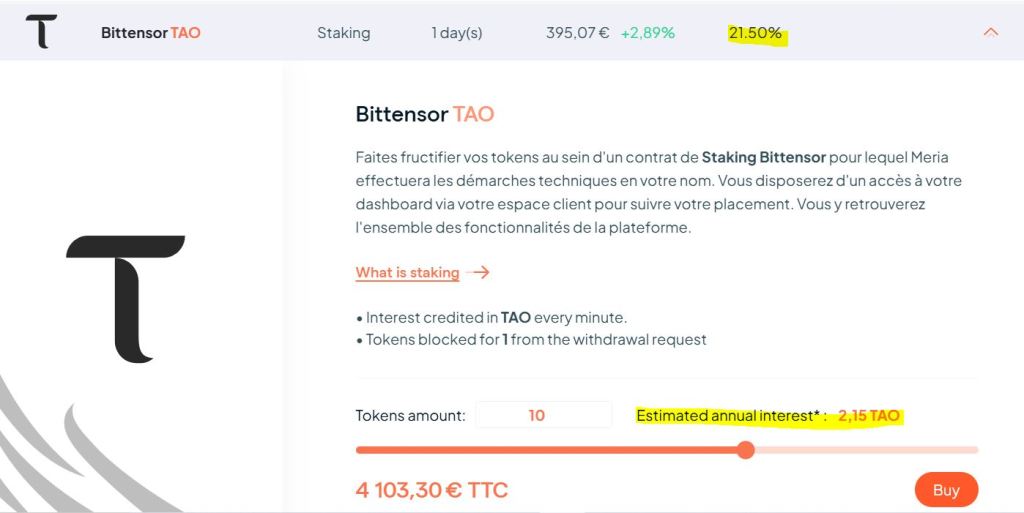
Do you know what staking is ? Staking on the blockchain refers to the process where participants lock up a certain amount of cryptocurrency to support the operations and security of a blockchain network. In return, they earn rewards, typically in the form of additional cryptocurrency. Staking is often associated with proof-of-stake (PoS) or similar consensus mechanisms used by many blockchains.
