

“Latin America stands out for its growing adoption and for seeking solutions to local needs,” said Mauro Andreoli, Cardano ambassador, during the Peru Blockchain Conference 2025.
“I was able to observe firsthand how a pattern has been repeating throughout Latin America: the desire to find a solution that responds to local needs,” shared Mauro Andreoli, Cardano ambassador in Buenos Aires, during the Peru Blockchain Conference, in conversation with Cointelegraph en Español.
According to Andreoli, Latin America has shown a level of adoption and massification higher than any other region. “Thanks to local communities and talent, the world has not been able to ignore what is happening in Latin America,” he stated.
Although the economic crisis strongly drove adoption, it was pointed out that in Argentina, the average user’s level of education and access to technological infrastructure, combined with local talent, formed the perfect formula to turn the country into a benchmark for the industry.
Innovation in Argentina
Andreoli commented on the recent arrival of IOG in Argentina and stated:
Inspired by the political and economic changes in Argentina, as well as by the developer teams building in the Cardano ecosystem (such as Eryx, TxPipe, Fairgate, GameChanger, among others), Charles Hoskinson, founder of Cardano, co-founder of Ethereum, and CEO of IOG, made the decision to open IOG offices in Buenos Aires.
Among the various teams working there, he highlighted the Lace Mobile digital wallet team, which provides services for the Cardano, Midnight, and Bitcoin DeFi ecosystems. He added that they are working on formalizing agreements with entities such as Globant and the University of Buenos Aires (UBA), among others.
He also emphasized the important work being carried out by Lucas Macchiavelli and Arturo García Colmenares, two of his colleagues who also represent the brand in this part of the world.
“In turn, efforts will be made to transform the offices into a hub for all potential clients, partners, developers, and community members who wish to carry out initiatives and projects in Buenos Aires, with the aim of promoting education, the economy, and both the local and international development of the network, its products, and its use cases,” it reported.
Andreoli emphasized that the country’s legal conditions regarding the blockchain industry are currently favorable; “as a result of the provisions of Decree 70/23, legally binding agreements can now be executed using blockchain as a method of extinguishing obligations, and it constitutes sufficient proof to demand enforcement in any court of law.”
He also expressed optimism about the development of the industry in Argentina, explaining that this type of legal framework allows companies to adapt to blockchain technology also in terms of compliance.
Regarding advances in the field of blockchain law, he recalled how last year, through a notarial deed, they formalized a mutual agreement between private parties, with the delivery and payments carried out via the Cardano network.
“We even identified the TxId (transaction identifier) of the delivery of the fungible assets, making it sufficient proof of the existence of the agreement in the event of a potential breach,” he explained.
Decentralization and Security
“Cardano impressed me from day one because it is a network based on academic papers that incorporates a Proof of Stake consensus system and combines a liquid staking system (which, years after its launch, would be included as a free market feature in the Mercado Pago app), and doubles its value through a self-custody system,” Andreoli stated.
According to his explanation, Cardano’s self-custody guarantees the actual, de facto and de jure, possession of any type of asset, “preventing something similar to what happened during the darkest era of our country, known as the corralito.”
And he concluded:
Furthermore, since its launch in 2017, the network has never stopped even once, nor has it suffered a single hack, remaining operational 24/7.
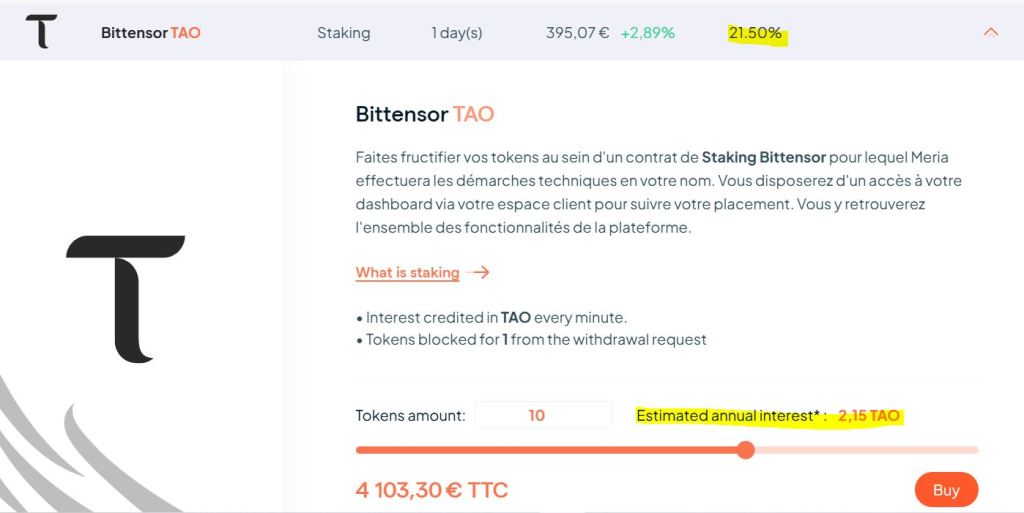
Do you know what staking is ? Staking on the blockchain refers to the process where participants lock up a certain amount of cryptocurrency to support the operations and security of a blockchain network. In return, they earn rewards, typically in the form of additional cryptocurrency. Staking is often associated with proof-of-stake (PoS) or similar consensus mechanisms used by many blockchains.
