

Charles Hoskinson, the co-founder of Ethereum and Cardano, shared in his latest Q&A session his optimistic outlook on Cardano’s future, highlighting Argentina as a key market for the platform’s expansion.
Charles Hoskinson stated that Cardano’s growth in Latin America is well-positioned, especially due to the political changes in Argentina under the leadership of Javier Milei, whom he described as a visionary leader who could facilitate large-scale cryptocurrency adoption.
Cardano’s Praise for Argentina
The CEO of IOHK (Input Output Hong Kong), the company behind Cardano, praised Milei for his pragmatic approach to the digital economy and his willingness to disintermediate central banks, which aligns with Cardano’s core principles.
Hoskinson emphasized that Javier Milei is not only open to cryptocurrencies but is also implementing policies to integrate these technologies into the country’s financial infrastructure without the need for new laws. He considered this stance key to Cardano’s future in the region.
Charles Hoskinson has praised Argentina, particularly in the context of the policies implemented by President Javier Milei. According to Hoskinson, Milei’s economic reforms and approach toward cryptocurrencies make Argentina the most promising country for Cardano’s expansion in Latin America.
“Argentina will likely be the first country to have private money. Everything will be crypto. It’s a huge opportunity, and Cardano has the advantage of being a pioneer. We have the largest office among the top 10 cryptocurrencies in Buenos Aires,” explained Charles Hoskinson in an online broadcast.
Hoskinson emphasized that Milei not only accepts cryptocurrencies but also promotes an environment where crypto can thrive without the need for additional legislation.
In addition, Hoskinson commented on how Argentina’s political situation offers a unique opportunity for Cardano to establish itself in the country and expand its infrastructure. In contrast to other countries like El Salvador, Hoskinson criticized other leaders such as Nayib Bukele for ‘their authoritarian approach’ as well as for the ‘lack of transparency,’ contrasting these with the structural advancements in Argentina.
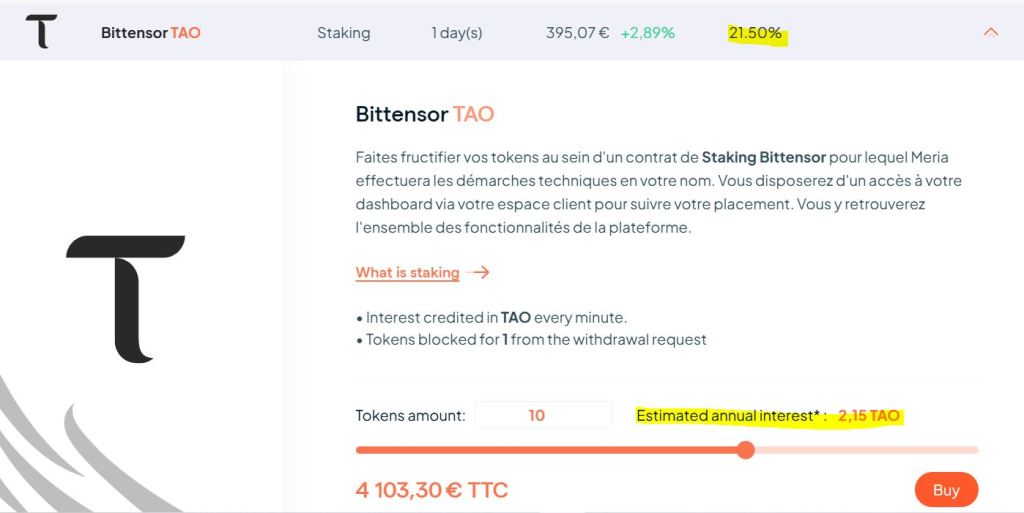
Do you know what staking is ? Staking on the blockchain refers to the process where participants lock up a certain amount of cryptocurrency to support the operations and security of a blockchain network. In return, they earn rewards, typically in the form of additional cryptocurrency. Staking is often associated with proof-of-stake (PoS) or similar consensus mechanisms used by many blockchains.
