
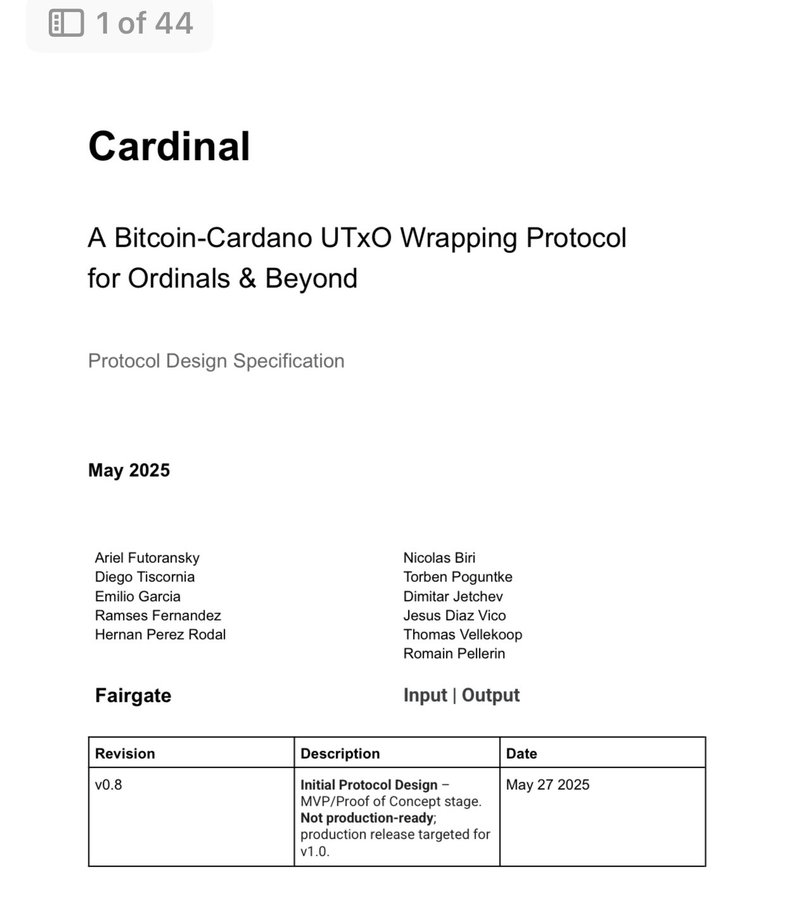
The on-chain transaction between Bitcoin and Cardano was facilitated by BitVMX, an interoperability protocol built using the BitVM programming language.
Recall, earlier in May, market analyst Dan Gambardello pointed to Cardano as the blockchain poised to unlock a secure framework for Bitcoin DeFi. This matches the ongoing partnership between Cardano’s EMURGO and BitcoinOS that started last year. Their collaboration focuses on enabling smart contract functionality for Bitcoin developers by leveraging Cardano’s network and Bitcoin’s liquidity.
 BitVMX: Extending Bitcoin’s Capabilities
BitVMX builds upon the concept of “disputable computation” introduced by BitVM, enabling complex smart contracts to execute off-chain while ensuring their outcomes can be verified and enforced on-chain using Bitcoin’s native scripting language. This approach allows for sophisticated computations without altering Bitcoin’s core protocol.
In this architecture, smart contract logic is compiled into RISC-V binaries and executed in a virtual machine environment. The system operates under the assumption that participants act honestly; however, if discrepancies arise, a formal challenge-response protocol is initiated on the Bitcoin network to resolve disputes.
Integration with Cardano’s Smart Contracts
Cardano’s smart contract languages, such as Plutus and Aiken, are well-suited for this integration due to their design around the Extended UTXO (EUTXO) model, which aligns closely with Bitcoin’s transaction structure. These contracts can be compiled into RISC-V binaries, facilitating their execution within the BitVMX.
This synergy enables developers to write high-assurance smart contracts on Cardano that can interact with Bitcoin, effectively bridging the two ecosystems and expanding the potential for DeFi applications.
Implications for Bitcoin DeFi
The collaboration between BitVMX and Cardano paves the way for robust DeFi functionalities on the Bitcoin network without compromising its security and decentralization principles. By leveraging Cardano’s advanced smart contract capabilities and BitVMX’s off-chain execution model, developers can create complex financial applications that operate seamlessly across both blockchains.
This integration signifies a significant step toward a more interconnected blockchain ecosystem, where the strengths of different platforms are harnessed to deliver innovative and secure financial solutions.
BitVMX has strong conceptual links with Zero-Knowledge Proofs (ZKPs), particularly in how it enables off-chain computation with on-chain verification — a foundational idea also present in ZK systems. Here’s how they relate:
 BitVMX and Zero-Knowledge Proofs: The Connection
1. Disputable Computation vs. Zero-Knowledge Proofs
- BitVMX uses a model called disputable computation: one party (the prover) executes a contract off-chain and submits the result to the Bitcoin network, and another party (the verifier) can challenge that result if it’s incorrect.
- This is similar in spirit to ZK rollups or ZK-STARKs/SNARKs, where a proof is generated off-chain and verified on-chain, ensuring correctness without needing to redo the computation.
2. Off-chain Computation
- Both BitVMX and ZKPs aim to reduce on-chain computation by performing heavy logic off-chain and only interacting with the blockchain to confirm the result.
- ZKPs use cryptographic proofs (e.g., SNARKs) that can be verified quickly on-chain.
- BitVMX uses interactive verification on-chain if a dispute arises, and otherwise assumes honest execution.
3. Verifiability and Trust Minimization
- ZKPs offer non-interactive proofs: once generated, they can be verified by anyone with no need to see the original computation.
- BitVMX relies on interactive fraud proofs — similar to Optimistic Rollups — where the result is accepted unless someone disputes it.
4. Privacy (Key Difference)
- ZKPs inherently provide privacy, proving a result is correct without revealing the data.
- BitVMX does not aim for privacy, but focuses on verifiability and correctness within Bitcoin’s limited scripting environment.
While BitVMX is not a ZK protocol, it shares goals with ZK systems:
- Reduce on-chain load
- Enable complex logic off-chain
- Ensure on-chain verifiability
They differ in implementation: ZKPs use cryptography; BitVMX uses interactive game-theoretic verification. But both contribute to the same broader vision of scalable, secure, and decentralized smart contracts.
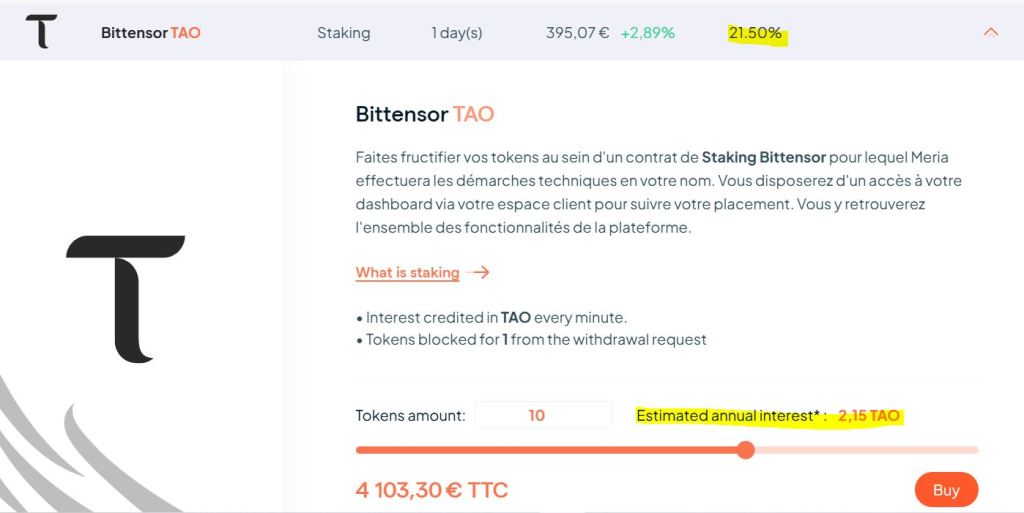
Do you know what staking is ? Staking on the blockchain refers to the process where participants lock up a certain amount of cryptocurrency to support the operations and security of a blockchain network. In return, they earn rewards, typically in the form of additional cryptocurrency. Staking is often associated with proof-of-stake (PoS) or similar consensus mechanisms used by many blockchains.
