
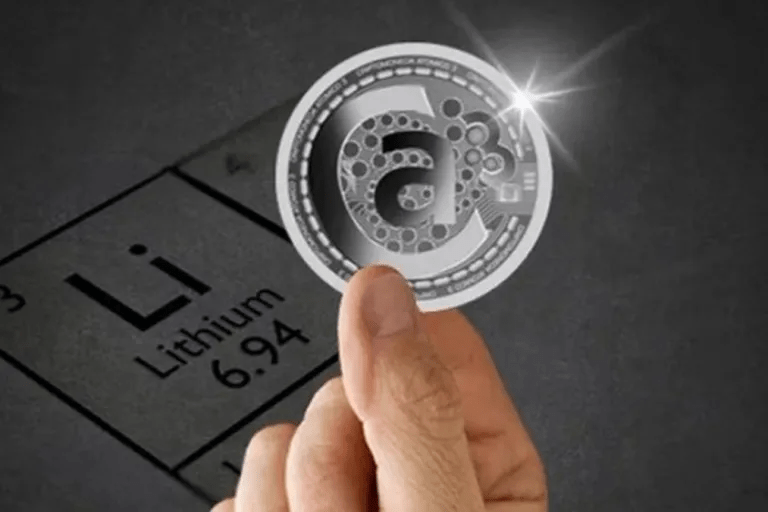
After securing a key alliance with Cardano, the mining asset received approval from the National Securities Commission. So far, it operates with a volume of $65,000 and expects to join larger platforms such as Binance and CoinMarketCap.
After securing a key alliance with Cardano, the mining asset received approval from the National Securities Commission. So far, it operates with a volume of $65,000 and expects to join larger platforms such as Binance and CoinMarketCap.
Lithium tokenization is a concept that began gaining attention in mid-2024, when the launch of Atómico 3 was announced, the Argentine cryptocurrency backed by the mineral itself. While preparing for its entry into larger platforms, the asset completed a key milestone for its growth by receiving approval from the National Securities Commission (CNV).
Thus, Atómico 3 is now authorized to operate within the Virtual Asset Service Providers (PSAV) system. This achievement strengthens transparency, which is presented as the main benefit and appeal of cryptocurrencies.
It is estimated that by the end of 2025, tokenization processes will have reached full development.
As described by Pablo Rutigliano, CEO of Atómico 3 and President of the Latin American Lithium Chamber, this virtual asset “has the particularity of tokenizing physical reserves, but it also projects valuing the reserves according to the internal calculation model, under a format in which we can include the flowchart that allows tokenizing the entire value chain.”
This tool, supported by blockchain, ensures traceability, price prediction, and stability in the supply chain. It is worth noting that the cryptocurrency has not yet made the leap to mass markets and is operating with a limited volume that does not exceed $65,000.
The next step for the project is to enter high-impact platforms such as Binance, the largest cryptocurrency exchange by trading volume, and CoinMarketCap, a key platform for measuring the market capitalization of digital assets.
“Our goal is to create a value chain that benefits all stakeholders, from small investors to large mining companies,” added Rutigliano in a conversation with the media.
Just over a month ago, the crypto reached an agreement with Cardano, which will provide its blockchain technology for the project. “Cardano not only advances blockchain technology but also contributes to the development of solutions for the major global challenges. Lithium, as a driver of the energy transition, fits perfectly with our vision,” said Charles Hoskinson, founder of the open-source blockchain platform, which is linked to the academic and scientific world.
The Importance of the PSAV Registration
The CNV’s PSAV registration is a system created to regulate and oversee companies offering services related to virtual assets, such as cryptocurrencies and other digital instruments in Argentina.
This registry allows the CNV to monitor and regulate the activities of virtual asset service providers to ensure they operate transparently, securely, and in compliance with the country’s regulations. It also aims to protect users and guarantee the integrity of the system.
Thanks to obtaining approval from the CNV, Atómico 3 will be able to operate legally and regulated within the Argentine virtual asset market.
The project emphasized that the approval validates its lithium tokenization business model and provides confidence to investors and users regarding the transparency and security of the company’s operations.
The Next Steps for Atómico 3
Atómico 3, in partnership with Zengate and Cardano’s blockchain, was launched on the Ettios market in August 2024. The next step is to move towards large-scale platforms and finalize tests for launching the Crypto Lithium Index, an innovative tool designed to transform the white gold market, capitalizing on its importance as a key resource in the energy transition.
“We are in the final stage to release our lithium index, which will be a cornerstone in the projection and valuation of digital and mining assets,” stated Pablo Rutigliano. This project aims “to offer greater liquidity, democratize access, reduce risks, automate processes, and eliminate intermediaries in the industry.”
Its promoters highlight that it will provide reliability and efficiency to a system where constant complaints about underreporting of natural resources by major international mining companies exist.
It is estimated that by the end of 2025, tokenization processes will have reached full development. The primary goal is to convert property rights over lithium into digital tokens, facilitating “more transparent and fluid transactions.”
This Argentine-origin cryptocurrency, backed by lithium reserves, is already operating with an initial volume of $65,000 and has shown significant growth, reaching 11,400 holders in just a few months.

Do you know what staking is ? Staking on the blockchain refers to the process where participants lock up a certain amount of cryptocurrency to support the operations and security of a blockchain network. In return, they earn rewards, typically in the form of additional cryptocurrency. Staking is often associated with proof-of-stake (PoS) or similar consensus mechanisms used by many blockchains.
Partners :
Cardano Use Case : Creation of a custom academic credentialing solution with Identus
